
Introduction: SaaS as an Investment, Not Just a Product
When businesses think about creating a new software solution, they naturally think in terms of what it's going to cost. But creating a SaaS offering is more than just a cost — it's a strategic investment in a business model that has the potential to create recurring revenue for years to come.
Unlike custom software projects, SaaS products require long-term vision. Working with the right SaaS development company is not merely about coding — it's about building a scalable, secure, and user-friendly platform that becomes a business asset.
This is where professional SaaS development services come in. Whether you require custom SaaS development services, a quick SaaS MVP development to validate your idea, or complete SaaS product development services, your choice will not only affect the upfront cost but also your potential ROI.
A quality SaaS development services company is more than a technical thinker. It helps you define the right scope, choose the most economical tech stack, and plan for scalability. With the help of experienced SaaS platform developers, you're not just building software — you're investing in a potential source of future revenue and business growth in the market.
In this guide, we’ll explore what drives the cost of SaaS development, why SaaS application development services are essential for long-term success, and how to plan your budget wisely to maximise return on investment.
Cost Drivers Beyond Development
When creating a SaaS product, most business owners expect to incur costs for design, coding, and testing. However, the actual investment is significantly more than the explicit development work. Knowing such underlying cost drivers makes you a better decision-maker when choosing between SaaS development services or hiring a SaaS development company.
Compliance & Security
If you operate a SaaS company in healthcare, fintech, or education, compliance factors like HIPAA, GDPR, or PCI DSS are extra complexity and cost. Experienced SaaS product development services teams design securely and bake in compliance day one, saving you from rework disasters later.
Infrastructure & Hosting
Choosing the right cloud platform — AWS, Azure, or GCP — impacts cost and scalability. Collaboration with SaaS platform developers enables infrastructure to be tailored for performance, uptime, and long-term cost savings. This is where SaaS application development solutions balance technical requirements against budget.
Scalability Strategy
An MVP SaaS can be made lean, but scaling to thousands of active users requires investment in databases, load balancing, and microservices. Savvy SaaS app development services enable one to start small and grow without needing to recreate the system.
UX/UI Design and Integrations
Seamless experiences are what contemporary SaaS products have to provide. Payment gateway, CRM, and analytics integrations add initial cost but are essential for user take-up. Custom SaaS development agencies generally supply reusable frameworks that facilitate accelerated integration and lower costs.
Ongoing Maintenance
Growth does not end when it is launched. Regular updates, monitoring, and customer support are continuing expenses. A mature SaaS development services company includes long-term maintenance planning in the offer so that there is a stable cost of operations.
These remarks illustrate how SaaS product budgeting is not simply an issue of "coding hours." The right SaaS development agency can advise you on matters of compliance, infrastructure, and scaling while keeping your costs under control.
SaaS MVP vs Full Product: Different Investment Mindsets
When building a SaaS product, founders typically face one of their initial major decisions: go lean with an MVP for SaaS or invest in a fully-fledged product right from the beginning. Both have different investment philosophies and will affect the role of your chosen SaaS development company.
SaaS MVP: Low-Risk Investment
A SaaS MVP development process is all about proving your idea quickly and with less capital expended. Instead of spending hundreds of thousands of dollars upfront, you utilise it to build only the essential features to attract early adopters and achieve product-market fit.
-
Average cost: $15,000–$50,000, depending on complexity.
-
Ideal for startups entering a new space.
-
Typically done by SaaS application development services teams that specialise in lean, fast builds.
This strategy minimises risk, gives real-world feedback, and helps secure additional funding before scaling further.
Full SaaS Product: Capital-Heavy Investment
Building a complete SaaS platform from day one is a long-term, resource-intensive investment. Here, you’ll likely work with a full-service SaaS development services company that provides everything from architecture to cloud deployment.
-
Average cost: $150,000–$300,000+ for enterprise-grade platforms.
-
Required for projects where compliance, integrations, and high scalability are non-negotiable.
Typically supported by organisations offering SaaS software development solutions that are suited for complex business logic.
Choosing the Appropriate Approach
The decision is dependent on your business goals:
-
If your primary issue is to validate an idea, start with an MVP and iterate.
-
If you already have validation and funds in hand, investing in a full SaaS product can help give you enough leverage over others.
Either way, investing with skilled SaaS platform developers sees your investment bearing not only a product, but the ground for growth.
Funding Models for SaaS Development
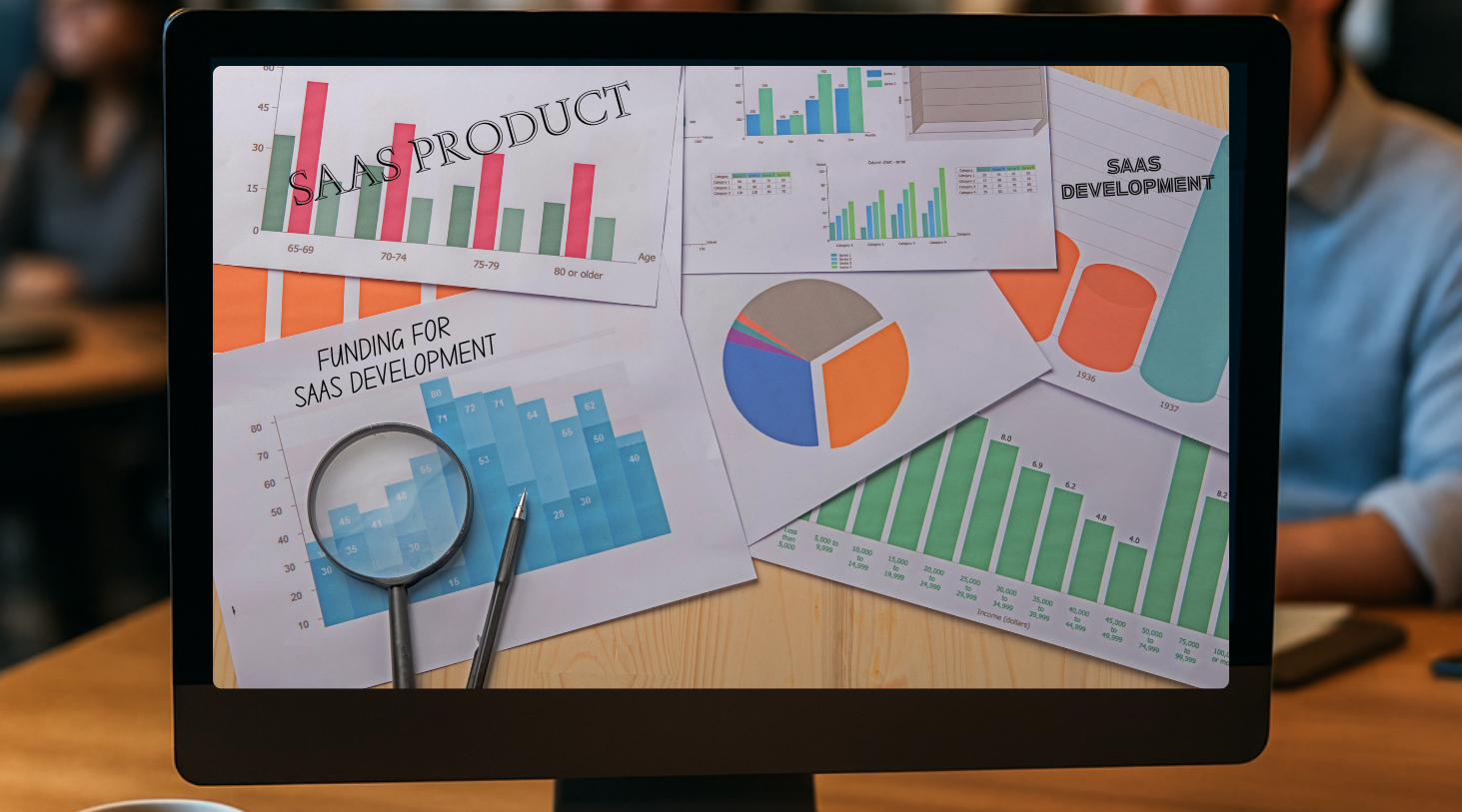
Building a SaaS product is not just about technology choice — it is also about choosing how to finance the development process. Your investment strategy will directly influence timelines, scope of features, and who you work with for SaaS development services.
Bootstrapping: Lean and Controlled
Bootstrapping is funding your SaaS product out of your personal funds. It tends to cause reduced budgets and compressed timelines, so SaaS MVP development is the most common path here.
-
Best for vanilla MVPs or specialised SaaS offerings.
-
Typically relies on saas application development services to get something to market quickly.
-
Advantage: Full ownership of the product and company vision.
-
Drawback: Delays in growth due to small capital.
VC-Backed SaaS: Capital-Intensive Growth
For startups looking to disrupt a market or launch with an enterprise-class platform, venture capital can be leveraged to fund aggressive growth. With VC backing, founders will choose a full-service SaaS development company that can produce scalable, secure platforms.
-
Best fit for advanced SaaS platforms requiring compliance, integrations, and complex cloud infrastructure.
-
Average initial investment: $200,000+.
-
Perk: Faster market launch with robust features.
-
Downside: Higher burn rate and investor anxiety.
Hybrid Model: Step-by-Step Investment
A hybrid approach incorporates both of these: lean starts with an MVP and then raises external capital to scale. This approach is increasingly popular because it allows founders to test market fit without spending large amounts of money.
Typically means a joint effort with a SaaS development services provider for the MVP stage, with further scaling through full SaaS software development services.
Advantage: Reduced financial risk, quicker validation, and seamless transition to full product.
Risk: Requires meticulous planning to avoid inducing delays between MVP and scaling phases.
No matter if you bootstrap, raise VC money, or use a hybrid. The problem is aligning your financing model with your product strategy. Veteran SaaS platform developers can guide you on maximising ROI regardless of funding circumstances.
Cost Scenarios: From Lean Startup to Enterprise SaaS
Not every SaaS product requires the same level of investment. The price can vary quite a bit depending on complexity, target audience, and growth goals. Here are three typical SaaS cost scenarios that businesses face when working with a SaaS product development company.
Lean Startup: Validating the Idea
-
Investment Range: $15,000 – $50,000
-
What You Get: A functional SaaS MVP with core features, typical UI/UX, and minimum infrastructure.
-
Best Fit: Growth-stage SaaS companies scaling to thousands of users.
-
Who Builds It: Usually resolved by teams that specialise in SaaS MVP development and SaaS application development services.
-
Example: Small task management app or niche scheduling app.
Growth-Stage SaaS: Scaling to Thousands of Users
-
Investment Range: $70,000 – $150,000
-
What You Get: Scalable SaaS platform with refined design, integrations (payments, CRMs, APIs), and additional features.
-
Best Fit: Startups that have already validated their MVP and are ready to scale.
-
Who Builds It: Typically built in conjunction with an agency or SaaS development services company that is capable of scaling.
-
Example: A multi-tenant SaaS CRM with role-based access.
Enterprise SaaS: Full-Scale Platform
-
Investment Range: $200,000+
-
What You Get: Enterprise-grade SaaS software with multi-tenancy, high security, compliance (GDPR, HIPAA, PCI DSS), high availability, and sound infrastructure.
-
Best Fit: Incubated startups or established businesses expanding to new SaaS niches.
-
Who Builds It: Must engage the services of an in-house full-service SaaS product development company offering custom SaaS development services and maintenance support.
-
Example: An enterprise SaaS HR solution for multinational corporations.
These examples show that SaaS creation is "not a one size fits all" proposition. Whether you need a lean MVP or a sophisticated enterprise application, working with skilled SaaS platform developers guarantees that your investment falls within both your financial constraints and business aspirations.
Hidden Costs Most Founders Overlook
In budgeting for SaaS, founders usually only consider the upfront development cost — coding, design, and testing. In reality, long-term success depends on factoring in other expenses that are prone to underbudgeting. Ignoring these "hidden costs" can very quickly turn a potential launch into an expensive surprise.
Security and Compliance
Compliance with regulations (PCI DSS, GDPR, HIPAA) is not optional for most SaaS products. Implementing these standards involves additional effort from your SaaS product development company. Security audits, data encryption, and access control systems add to cost, but their exclusion can result in penalties or user trust issues.
Ongoing Maintenance and Support
Every SaaS needs continuous monitoring, bug killing, and maintenance. A SaaS development services company usually provides maintenance packages, but startups tend to forget to plan for this. Budget 15–25% of your cost of developing your SaaS annually for long-term maintenance.
Integrations and APIs
New SaaS products barely exist by themselves. Payment gateways, CRMs, analytics, and cloud solutions all must be integrated. Having a partner with SaaS application development services that come with reusable integration modules can be cost-saving, but custom integrations still require more budget.
Infrastructure and Cloud Costs
Even after deployment, hosting on AWS, Azure, or GCP incurs a cost on a monthly basis. Scaling to thousands of users from hundreds means additional expenses for storage, load balancing, and monitoring. That's where experienced SaaS platform developers fine-tune infrastructure to avoid overspending.
Customer Success and Training
A successful SaaS is not just about tech — it's also about enabling users to be successful. Most founders are overlooking the onboarding cost, documentation, and customer support. It is typical for agencies offering SaaS software development services to assist in developing admin panels, analytics dashboards, and onboarding flows to minimise manual support costs.
The actual investment in SaaS is greater than upfront development. If you're working with a good SaaS development company or custom SaaS development services organisation, ensure you're planning and budgeting for these recurring expenses — instead of getting surprised down the line.
Budget Security
Budget overflow is likely the least understood "hidden expense." So many SaaS projects start with an estimate yet run much more than the budgeted figure due to scope creep, unclear requirements, or bad cost control. Avoiding this requires that you employ a SaaS development services company that offers fixed-price contracts and guaranteed budget transparency. An experienced partner will save you from surprise invoices or runaway costs.
For example, Join.To.IT is an organisation that offers SaaS product development services at a fixed price, having assured results at mutually decided budgetary constraints. This kind of partnership helps startups and businesses alike in building SaaS products with full cost certainty.
SaaS as a Long-Term Asset
Developing a SaaS product cannot be viewed as a one-time cost but more as an investment in a long-term digital property. Unlike traditional software projects, SaaS platforms generate recurring revenue, provide opportunities for scalability, and create brand equity in the long term.
SaaS as Recurring Revenue Engine
With the right SaaS product development services, your platform is a consistent revenue source. Subscription-based pricing models allow companies to scale cost recovery for the initial investment over time. A SaaS development agency with expertise can help build the platform with this model of growth.
ROI-Oriented Development
Growing with a quality SaaS development company implies that each development decision — from MVP to scaling — is ROI-biased. For example, starting with SaaS MVP development avoids upfront risk, with enterprise-class customised SaaS development services provided after the product validates market demand.
Scalability and Maintenance as Assets
Unlike static software, SaaS products evolve. SaaS software development or SaaS application development teams pay attention to developing a flexible architecture. This makes scaling affordable and makes infrastructure and codebase long-term business assets instead of liabilities.
Market Expansion
With the help of seasoned SaaS platform developers, SaaS products can be scaled globally with features of compliance and localisation. Such strategic investment increases the value of the product and renders it an asset for future acquisitions or fundraising.
That is, SaaS isn't just software that you create — it's a business asset which grows in value. Choosing the right SaaS development services company ensures that every dollar you invest today lays the foundations for tomorrow's revenue, scalability, and market domination.
To turn these numbers into a plan for your product, see how we work as a SaaS development company, from MVP to production.
.png.png)