
Proof of concept (PoC)
Answers "can this be built?" A small technical test of the riskiest part, such as an integration or an AI feature. Usually internal, with no real users.
Join.To.IT builds MVPs for startups from scratch: discovery, a UX prototype, development, launch and iterations after launch. A typical MVP takes 2–4 months and starts from $9,600 as a fixed-price package. You get a product real users can sign up for, and code your own team can keep building on.
An MVP (minimum viable product) is the smallest version of your product that real users can use and pay for. Its job is to answer one question with data: will people use this the way you expect? Everything that does not help answer it waits for a later release.
This page is about building an MVP from an idea or a spec. If you already have a prototype made with Lovable, Bolt, Cursor or Replit and need it ready for paying customers, see our AI MVP to production service instead.
The three answer different questions. Many startups need only one or two of them before raising money or launching.
Answers "can this be built?" A small technical test of the riskiest part, such as an integration or an AI feature. Usually internal, with no real users.
Answers "will users understand it?" A clickable model of the product to test the flows with users or show investors. Looks real, but stores no real data.
Answers "will people use it and pay?" A working product with the smallest useful feature set, real accounts and real data, released to first users.
Five parts, each with something you can use or show, even if you pause after it.
Interviews, competitor review and a feature list split into must-have and later. You get a scope, user flows, an architecture outline and a fixed-price estimate.
A clickable prototype of the key screens, tested with a few target users before code is written. Changes are cheap at this stage, so this is where most of them happen.
Web or mobile app, backend, admin panel and analytics, built in two-week sprints. After each sprint you get a build to install and show around.
Cloud setup, CI/CD, monitoring, store releases for mobile apps, and a launch checklist that covers sign-up, payments and support.
Usage data and user feedback turned into the next sprints: fixes, the features users asked for, and the ones you dropped from version one.
From the first call to launch, a typical MVP takes 2–4 months. You approve the scope and the prototype before development starts.
Goals, users, competitors and the riskiest assumptions, turned into a feature list and an estimate. About 1–2 weeks for an MVP-sized product.
Outcome A scope and fixed price you can plan around
Key screens as a clickable prototype, reviewed with you and a few target users. Discovery and the prototype together take 2–4 weeks.
Outcome A prototype to test with users or show investors
Frontend, backend and integrations in two-week sprints, with a demo and a build to try at the end of each one.
Outcome Working software every two weeks
QA on the critical flows, production environment, monitoring and store submission for mobile apps.
Outcome An MVP live with first users
We watch usage, fix what users trip over, and plan the next releases with you based on data, not guesses.
Outcome A roadmap built on how people use the product
Fixed-price packages for an agreed scope. Every estimate starts with a short call about your scope.
| Package | Prototype | MVP | MVP + scale |
|---|---|---|---|
| Price | From $2,400 | From $9,600 | From $28,800 |
| Minimum effort | 160 h | 640 h | 1,920 h |
| Typical timeline | 2–4 weeks | 2–4 months | 4–8 months |
| What you get | Discovery, a clickable UX prototype and a working proof of the riskiest feature, to test the idea with users or investors | Web or mobile product with sign-up, the core workflows, an admin panel, analytics and cloud deployment, ready for first users | Payments, integrations, a second platform or user role, automated tests, monitoring and iterations based on user feedback |
Prices are a starting point for the minimum scope of each package. The final price depends on features, integrations and the state of any existing code.
We pick a stack your future team can hire for and that will not need a rewrite once the MVP works. These are the tools we use most often.
Currux wanted people to rent, lease or subscribe to a used car with as little paperwork as possible. Instead of building the whole rental operation first, the first release was a website with a car list and a request form.
Once that request flow was in use, Join.To.IT proposed a mobile app and built it on the same flow. Today customers rent a car from the app in minutes, with three ways to get one: rent, lease or subscribe.
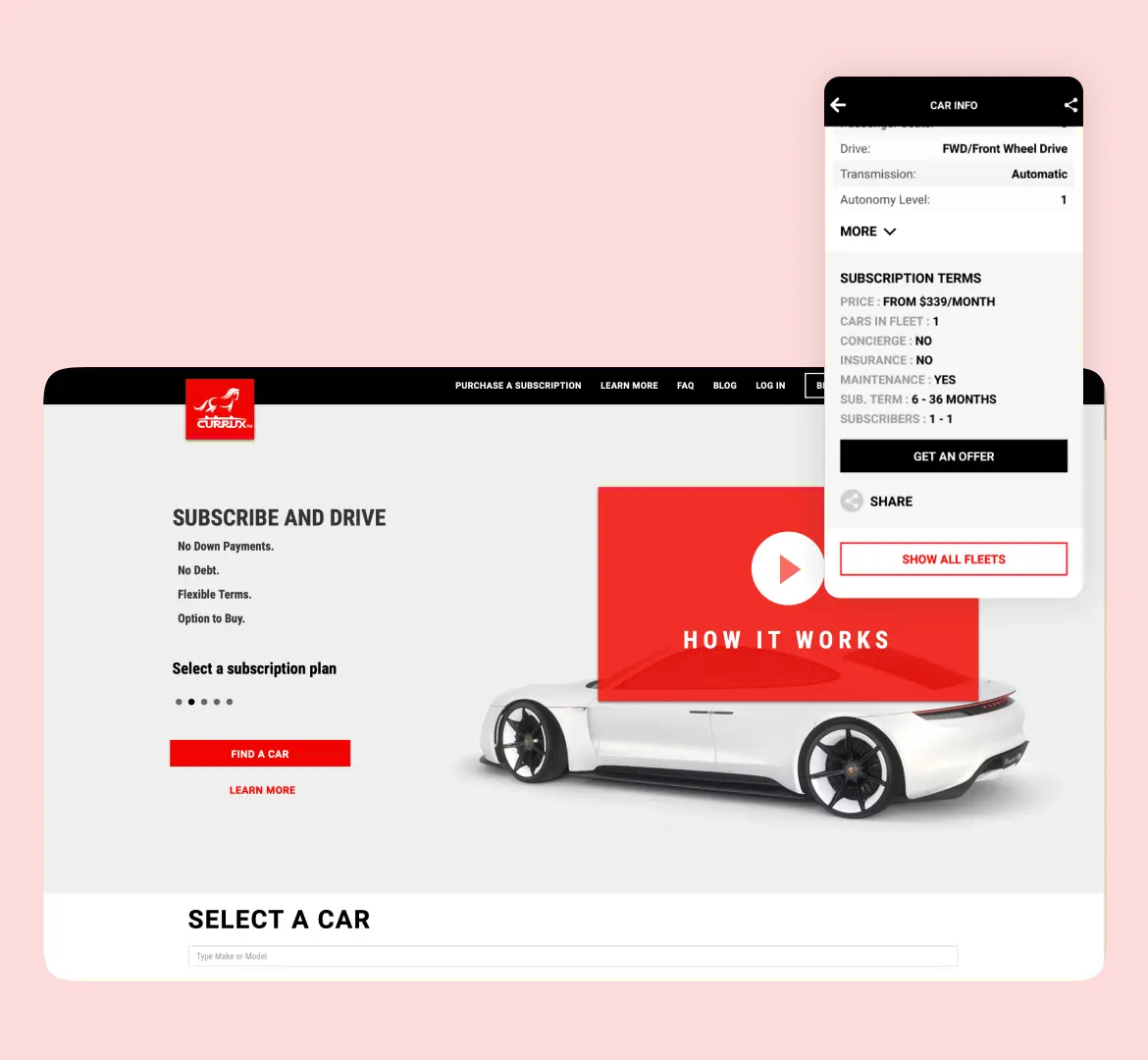
From a simple request website to an app that rents a car in minutes.
Minutes to rent a car from the mobile app
Read the case study →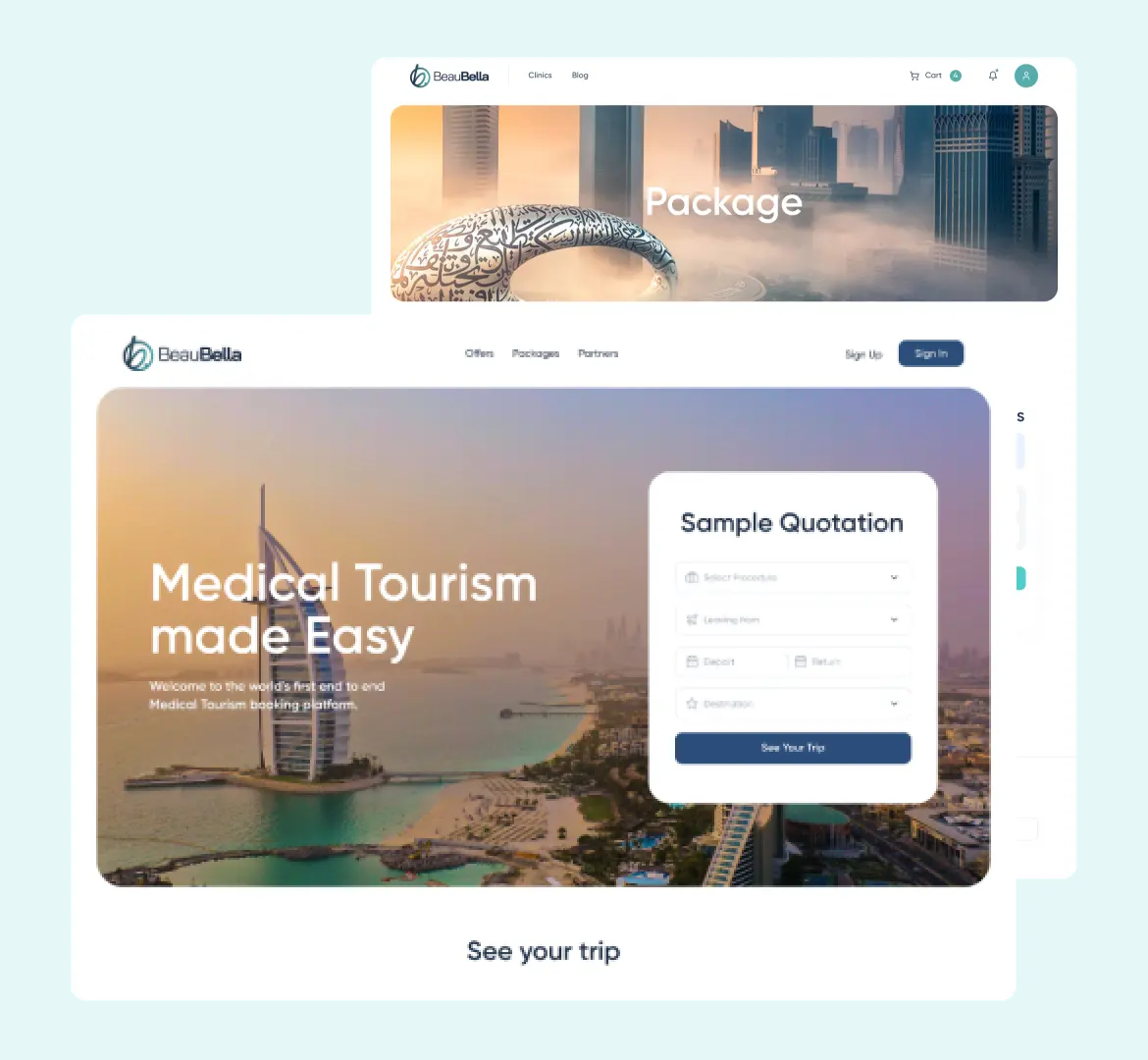
Six questions in, three bookable treatment-and-travel packages out.
6 questions to get started
Read the case study →A prototype starts from $2,400, an MVP from $9,600, and an MVP with payments, integrations and a second platform from $28,800. These are fixed-price packages; work outside the scope is estimated separately. The price depends mostly on the number of user roles, integrations and platforms.
A typical MVP takes 2–4 months from discovery to launch. A prototype takes 2–4 weeks, and an MVP with integrations, payments and a second platform 4–8 months. A SaaS MVP with billing and several user roles usually sits at the longer end. We confirm the exact timeline after discovery.
Yes. AI coding tools speed up routine work such as boilerplate, tests and first drafts of screens, which shortens sprints. Architecture, code review, security and testing stay with experienced engineers, so the MVP does not need a rewrite when real users arrive. An engineer reviews every AI-generated change.
You do. The code, designs and documentation are created for your company, and the repositories and cloud accounts can live under your ownership from the first sprint. That matters for fundraising, due diligence and any future acquisition. We confirm the exact terms in the contract before work starts.
We watch usage and feedback, fix what users struggle with and plan the next releases with you. You can keep the same team for ongoing development, scale it up as the product grows, or hand the code to your in-house engineers with documentation.