
Advisor app for a wealth or insurance firm
Advisors see client portfolios or policies, log meetings and send documents for e-signature from a phone. Staff sign in with the firm’s Microsoft account, and every action is written to an audit trail.
If you need a mobile app development company in Dallas that can get through your IT security review and plug into Salesforce or NetSuite, that is the work we do most for clients here. Most Dallas teams bring an existing back office, and the app has to fit into it without creating new manual work.
Many Dallas app projects come from inside large companies. The metro has a deep bench of corporate headquarters, banks and insurers with big back offices, and telecom firms along the Telecom Corridor in Richardson. When a team there commissions an app, the first audience is not the end user. It is the IT security reviewer, who wants to know how staff sign in, where data is stored, how the app is distributed and who can wipe it from a lost phone.
So we do that work early. During discovery we fill in the vendor security questionnaire, agree on single sign-on through Azure AD or Okta, and plan distribution through your MDM or the public stores. Then we map the systems the app reads and writes, usually a CRM and an ERP, sometimes a payment processor too. Screens come after. Projects that skip this step tend to stall in review a few weeks before launch, and nobody enjoys explaining that delay upward.
Advisors see client portfolios or policies, log meetings and send documents for e-signature from a phone. Staff sign in with the firm’s Microsoft account, and every action is written to an audit trail.
Drivers get their stops in route order, scan freight, capture photo proof and signatures, and keep working through dead zones. Dispatch sees each status change in the TMS without anyone retyping it.
Customers browse cars, verify a driver license, sign the agreement and pay a monthly fee in the app. It is the kind of flow we built for Currux, a car rental and subscription marketplace.
Packages are fixed-price, with scope and integrations named up front, so procurement gets one number to approve. Change requests and support after launch are billed at $25–50 per hour.
| Package | Proof of concept | MVP | Market ready | Enterprise |
|---|---|---|---|---|
| Price | From $2,400 | From $9,600 | From $24,000 | From $48,000 |
| Typical timeline | 2–4 weeks | 2–4 months | 4–7 months | 7+ months |
| Typical Dallas project | SSO login and one live CRM or TMS call, to prove the integration works before budget is committed | Driver or advisor app in both stores with one back-office integration and an admin panel | Customer app with payments, push notifications, audit logging and security review sign-off | Company-wide app with MDM rollout, several system integrations and a support agreement |
Our engineers work U.S. business hours, which lines up with a Central Time day, so your IT and security people can join working sessions instead of reading summaries the next morning. Each package has a fixed scope and one project manager, and you can install a new build after every two-week sprint.
Our U.S. operations are facilitated through Orcatec LLC, our trusted American business partner, enabling seamless collaboration with clients across the United States.
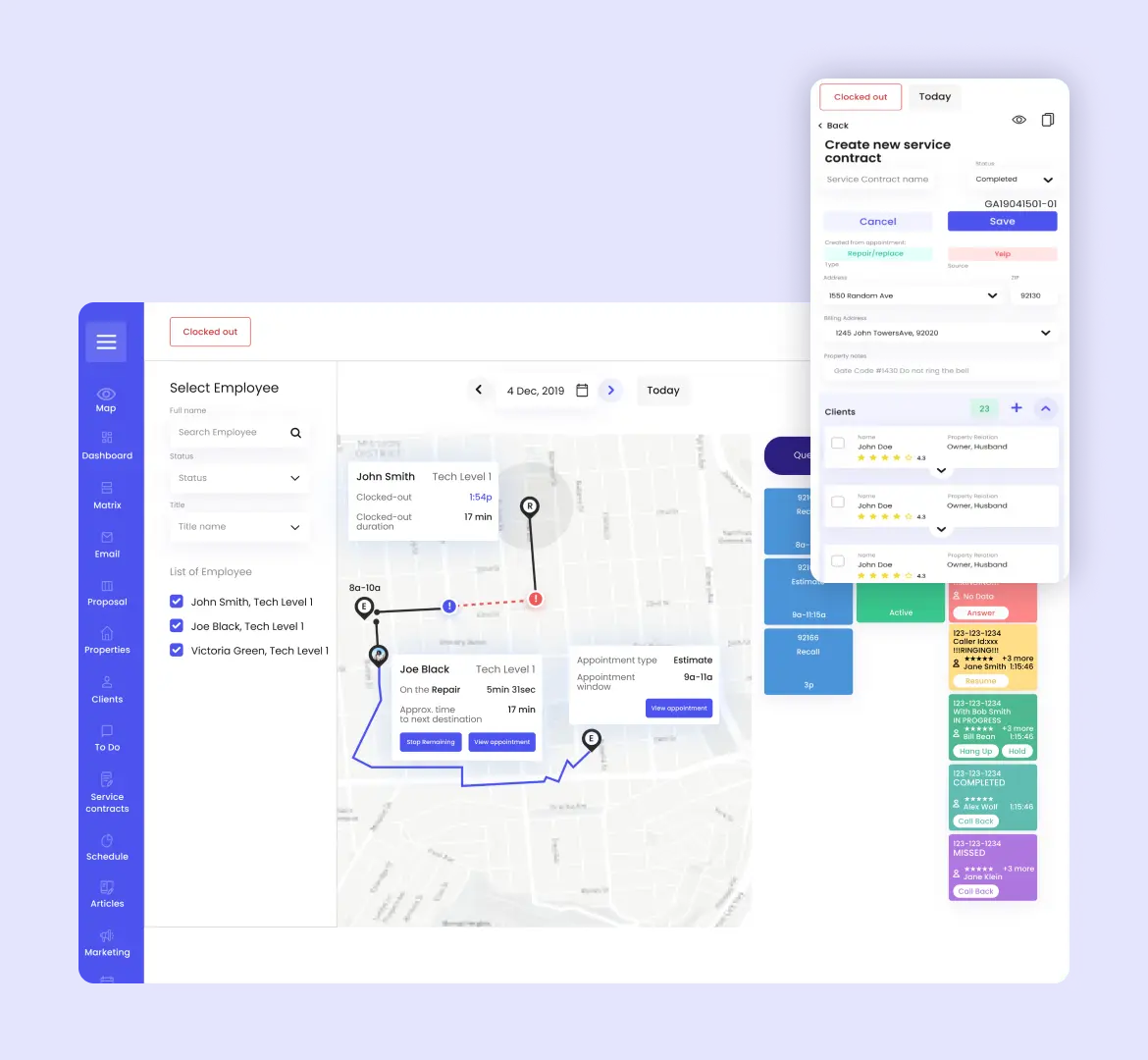
The whole working day in one platform, with the tools the team already used built in.
~300 daily users on the platform
Read the case study →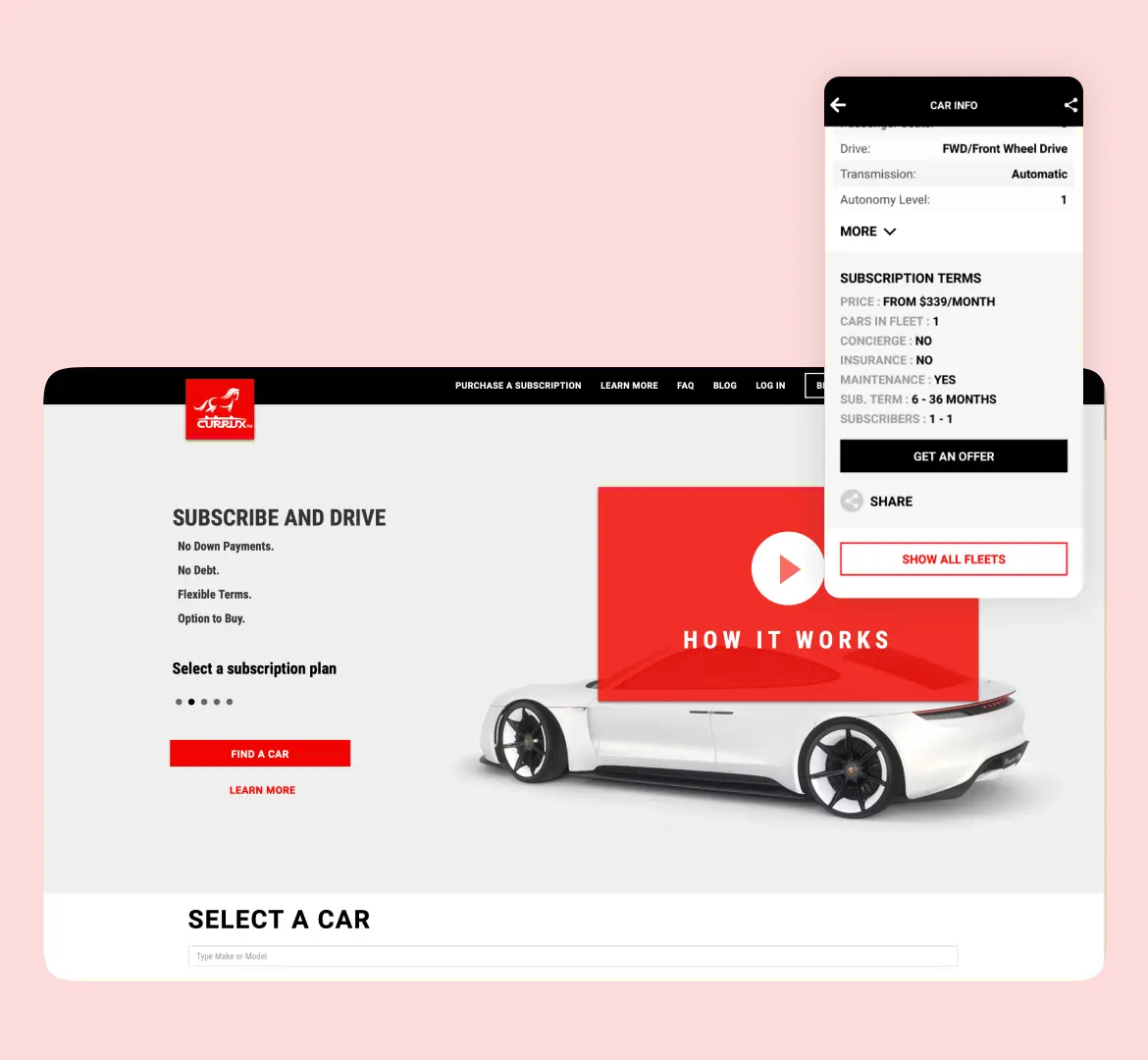
From a simple request website to an app that rents a car in minutes.
Minutes to rent a car from the mobile app
Read the case study →We complete security questionnaires during discovery, before the build, and explain how the app handles sign-in, encryption, data storage and lost devices. We work to the controls your security team sets, such as SSO, MDM distribution or a penetration test by a firm you choose. If a test is required, we plan time in the schedule to fix its findings.
Yes. Driver apps keep the day’s loads, documents and photos on the phone and sync when a signal returns, with retries that never send the same delivery twice. We also agree with you what happens when dispatch changes a stop the driver has already started, because that conflict comes up on almost every freight project.
In most cases. We check each system’s API access and limits in discovery and price the integrations into the package. Orcatec, a field-service platform we built, connects to many outside services, so we have dealt with rate limits, webhooks that arrive out of order and vendors who change their APIs.
Yes. Currux, one of our cases, is a car rental and subscription marketplace. That kind of app needs license checks, agreements signed on the phone, deposits, recurring payments and a calendar that never double-books a vehicle. For a Dallas dealer group or rental operator we would bring what we learned there, not the code.
Mostly integrations and security requirements. An app that only displays data costs far less than one that writes back to an ERP, uses SSO and goes through a security review. Fixed packages start at $2,400 for a proof of concept, $9,600 for an MVP, $24,000 for a market-ready app and $48,000 for enterprise.