
Clinical study companion app
Participants sign consent in the app, get visit reminders, fill out symptom diaries and pair a glucose meter or activity tracker over Bluetooth. The study team watches enrollment and missed entries from a web dashboard.
Our mobile app development in San Diego centers on apps that handle health data, talk to lab or wearable devices, or serve visitors booking on the go. Most projects here start with one hard constraint, like a Bluetooth sensor or a consent flow, and we design the app around it.
A lot of the app work coming out of San Diego is tied to life sciences. The biotech companies around Torrey Pines and Sorrento Valley, the research groups connected to UC San Diego and the medical-device makers in the county all run studies and pilots that now collect data on a phone. In those projects the screens are the easy part. The work is in pairing devices reliably, recording consent correctly and making sure nothing a participant enters gets lost between the phone and the study database.
The other half of our San Diego conversations is about visitors and patients who are not local. Hotels, tour operators and clinic groups serve people who book from another city or country, often in Spanish, often on a phone with roaming data. For them we keep the booking flow short, cache what the user needs at the door and make sure foreign cards go through. We choose native or cross-platform after this, once we know which devices and connections the app has to handle.
Participants sign consent in the app, get visit reminders, fill out symptom diaries and pair a glucose meter or activity tracker over Bluetooth. The study team watches enrollment and missed entries from a web dashboard.
A booking app for a clinic group that treats patients from both sides of the border, with procedure packages, English and Spanish content, card deposits and follow-up check-ins after the patient goes home.
Tickets, timed entry and a mobile pass for a tour operator or attraction near the bay, with offline QR scanning so staff at the dock can keep boarding guests when the venue Wi-Fi drops.
Each package below is fixed-price, so scope and total are agreed before work starts. Smaller changes and ongoing support can run hourly at $25–50 per hour.
| Package | Proof of concept | MVP | Market ready | Enterprise |
|---|---|---|---|---|
| Price | From $2,400 | From $9,600 | From $24,000 | From $48,000 |
| Typical timeline | 2–4 weeks | 2–4 months | 4–7 months | 7+ months |
| What it looks like in San Diego | A Bluetooth pairing test with one device and a few participants, to prove the data arrives intact | A study or booking app in both stores with an admin panel, reminders and one key integration | Bilingual patient app with payments, EHR or booking engine sync and HIPAA-minded hosting | Multi-site research or clinic platform with several device types, audit logs and a staged rollout |
Our engineers keep U.S. business hours, so a San Diego product owner can hold standups and sprint demos inside the Pacific workday and get answers the same afternoon. For study and health apps we bring your clinical and compliance people into design reviews early, because changing a consent flow after launch costs far more than fixing it in the prototype. We also build the backend and admin tools behind the app, so you deal with one team.
Our U.S. operations are facilitated through Orcatec LLC, our trusted American business partner, enabling seamless collaboration with clients across the United States.
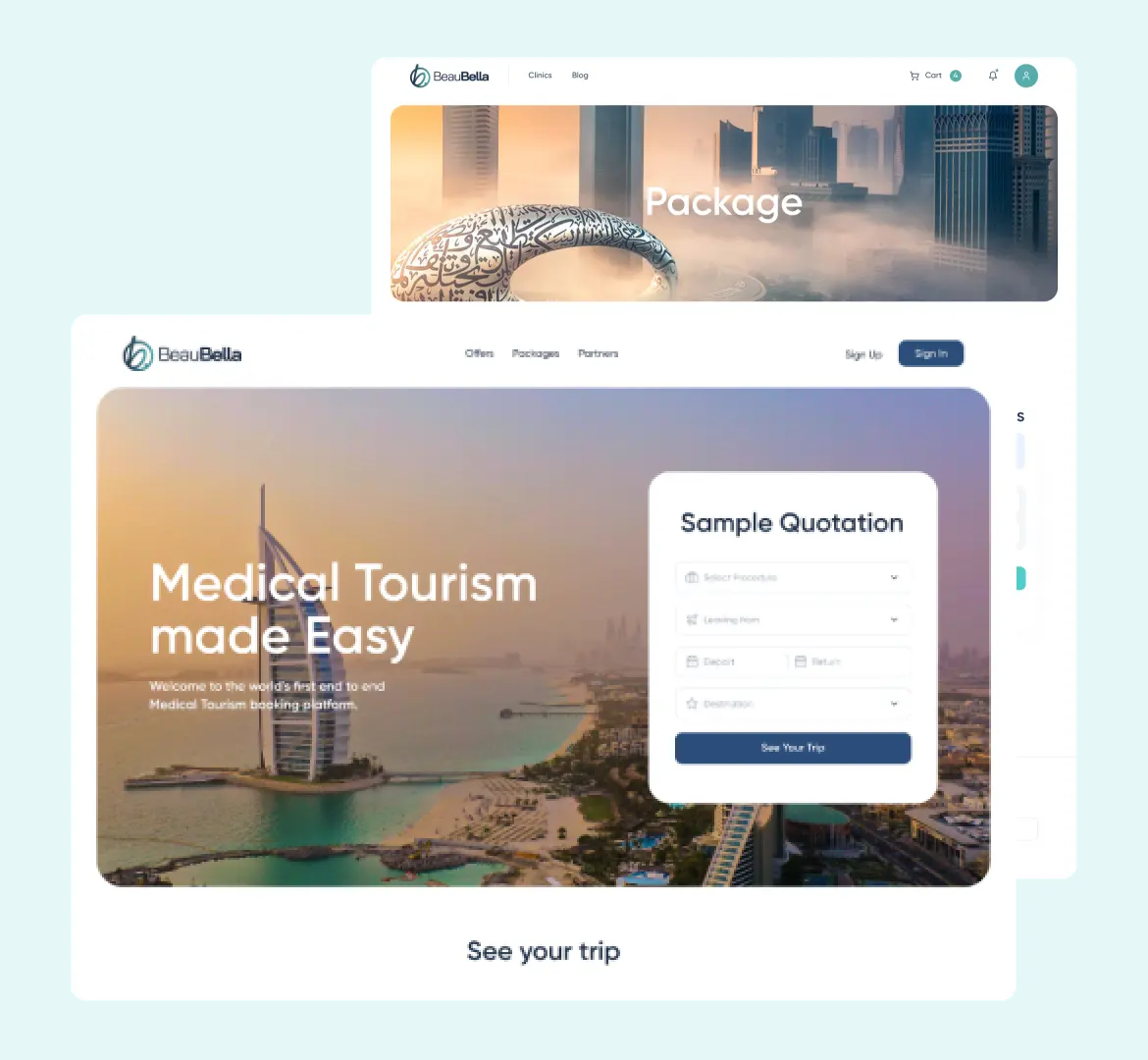
Six questions in, three bookable treatment-and-travel packages out.
6 questions to get started
Read the case study →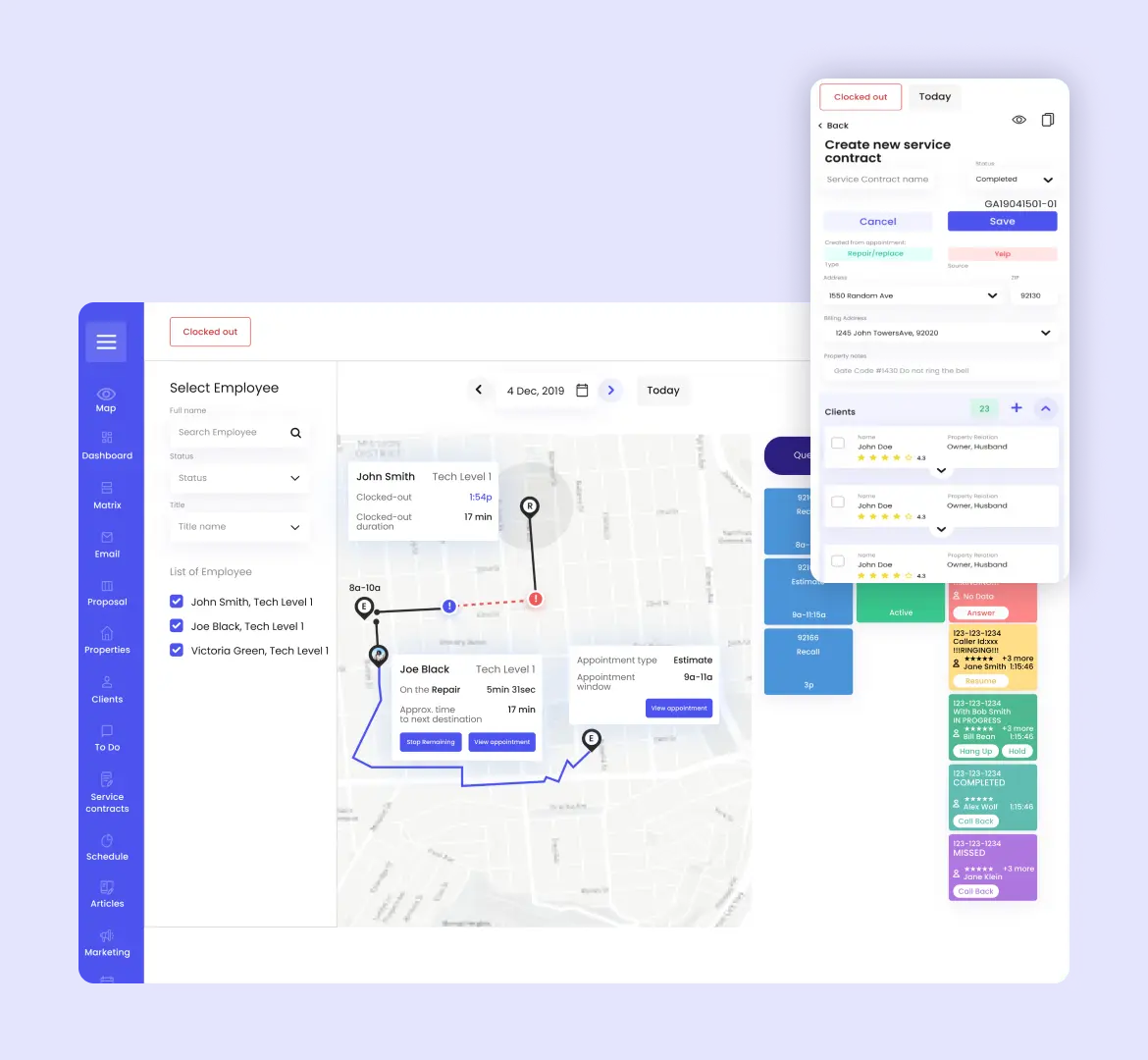
The whole working day in one platform, with the tools the team already used built in.
~300 daily users on the platform
Read the case study →We do not have our own office in the city. Our U.S. operations are facilitated through Orcatec LLC, whose address is Via De Santa Fe, 16950 in the San Diego area. Our engineers work remotely during U.S. business hours, and we meet San Diego clients by video call.
Usually, yes. We start with the device documentation or SDK and test pairing on the phones participants actually own, since Bluetooth behaves differently across Android models. If the device has no open protocol, we talk to the manufacturer before quoting. Readings stay on the phone until they upload, so a dropped connection does not leave gaps in the study data.
We design for HIPAA from the first sprint, with encrypted storage and transport, role-based access, audit logs and hosting on HIPAA-eligible cloud services covered by a business associate agreement. We follow the rules your compliance team sets and document what data the app keeps and where. Certification and final compliance stay with your organization.
Yes. We build English and Spanish interfaces from the start instead of translating at the end, accept international cards through the payment provider and keep booking steps short for people on roaming data. Our BeauBella project, a medical tourism booking platform in the UAE, dealt with similar questions about treatment packages and patients arriving from abroad.
Cost depends mostly on device integrations, the privacy work around patient data and how many systems the app syncs with. A proof of concept starts at $2,400, an MVP at $9,600, a market-ready app at $24,000 and an enterprise build at $48,000. All packages are fixed-price; extra work runs $25–50 per hour.