
The Rise of Conversational AI in SaaS
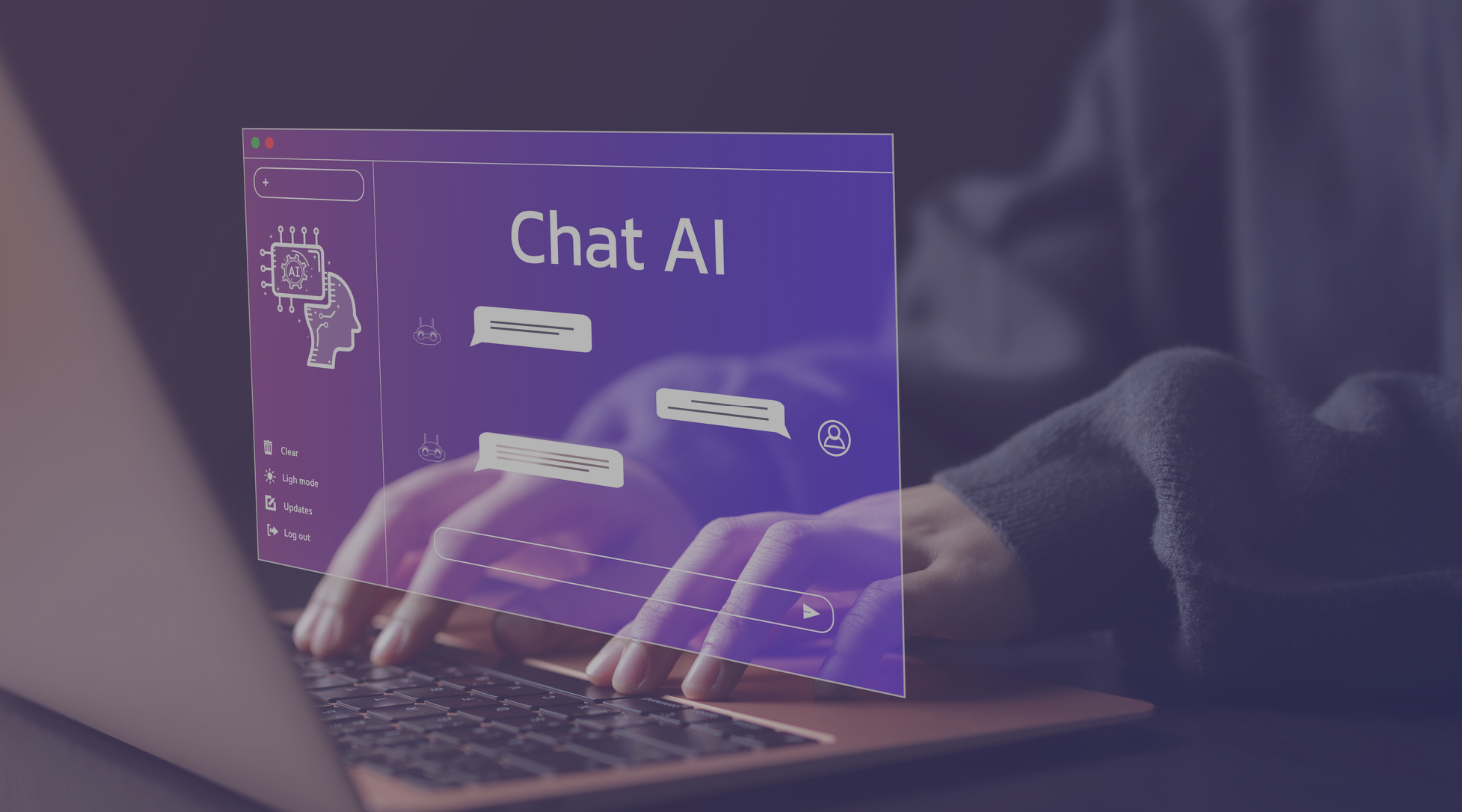
Over the last few years, conversational AI has evolved from simple FAQ robots to intelligent, context-aware assistants capable of managing complex workflows. In 2025, this technology transforms the way businesses engage with customers, automate tasks, and deliver frictionless digital experiences.
For businesses that are partnering with SaaS development companies, installing conversational AI is no longer a trend — it is now a part of creating competitive, user-focused products. As a company that is either a SaaS development company or a group of custom SaaS development service providers, adding complex chatbot functionalities is essential to remain competitive.
State-of-the-art AI-powered chat solutions are heavily integrated with SaaS application development services and SaaS software development services since they allow businesses to customise interactions at scale. Instead of static, pre-defined responses, AI-powered assistants learn and grow based on user habits, providing dynamic, accurate responses that improve customer experience.
Apart from this, with companies aiming at SaaS MVP development, conversational AI can act as a major differentiator. Early-stage products utilise AI assistants to impart immediate assistance, welcome the users better, and gather real-time feedback — all important for enhancing the product quickly and repeatedly. The majority of SaaS platform developers and providers of SaaS app development services now create MVPs with built-in chatbots or assistant modules to gain adoption and increase retention.
Choosing the right approach — whether custom-built chatbots tailored by your SaaS development agency or advanced GPT-powered assistants — depends on your business goals, user base, and the complexity of your product. Both options have their merits and challenges, which we’ll explore in the following sections.
What Are Custom Rule-Based Chatbots in SaaS MVP?
Custom rule-based bots are applications deployed to adhere to predetermined patterns. Unlike AI-driven assistants that "learn" from large language models, these bots adhere to logically defined rules to respond to a user query. They are typically deployed in support scenarios where steps are well-defined and routine, such as order status inquiry or basic troubleshooting.
For many businesses, it is possible to achieve predictability and complete control through rule-based chatbots by simply working with a SaaS development company or investing in SaaS application development services. You dictate the script, set all the branch paths, and determine each possible response. That is why they are so attractive for organisations that want consistent messaging and stringent compliance, especially in finance, healthcare, and regulated sectors.
When creating products with custom SaaS development services, it is very simple to integrate rule-based bots into the core application. They are a perfect fit for the SaaS product development services, as they can be tailored exactly to your workflows without incorporating third-party or uncontrolled AI behaviours.
Moreover, rule-based bots are easier to test and audit, and that is particularly crucial while conducting SaaS MVP development. In MVP phases, startups and product teams typically prefer starting small: showing core user value without going live with the complexity of AI. With a bespoke bot built in consultation with a SaaS development company or SaaS platform developers, teams can go live sooner, receive feedback, and enhance step by step.
However, while rule-based chatbots excel in structured use cases, they struggle to handle nuanced questions, unstructured data, or scenarios where context understanding is crucial. This is where advanced GPT-powered assistants can outperform, but at the cost of higher complexity and fewer guardrails.
In the next section, we’ll explore how GPT-powered assistants differ and when they may be the right choice for your SaaS application.
What Are GPT-powered Assistants in SaaS MVP?
.png)
GPT-based assistants employ large language models (LLMs) — advanced AI models that are trained on massive amounts of text to learn and generate human-like writing. Compared to rule-based bots, these assistants can comprehend context, process open questions, and provide more natural, conversational responses.
For companies working with SaaS development services, GPT-based assistants are a league above in user personalisation and automation. They don't remain within scripted confines. Instead, they learn from millions of instances and can adapt based on user phrasing, intent, and even tone.
Organising GPT-based assistants into your product — especially when developing SaaS product services or SaaS MVP development — can be a massive differentiator. With the ability to offer smart, real-time assistance, these assistants help remove churn and improve onboarding experiences. Gone is the notion that people feel like they're talking to a wooden robot; they experience something more human and trusting, and engaging.
For example, a SaaS app development services provider can leverage a GPT-powered assistant to answer complex support tickets, assist with product configuration, or even provide personalised tips on feature usage. This adaptability opens up new cross-selling, upselling, and proactive customer success initiatives.
Also, custom SaaS development companies can tailor GPT-based assistants to fit with brand voice, regional nuances, and specific workflows. Deep customisation makes a GPT assistant an extension of your brand rather than one more generic bot.
But they come with unique challenges: higher upfront cost, potential risks to data confidentiality and hallucination (wrong responses), and stricter model supervision. You get the right implementation, continuous fine-tuning, and industry-standard compliance from a well-established SaaS product development company or experienced SaaS platform developers.
The following section will contrast and compare these two approaches so you can choose the appropriate one for your business objective.
Key Factors for SaaS Companies to Consider
In deciding between a rule-based chatbot tailored to your needs and a GPT-powered assistant, SaaS firms must take into account not only technical functionality but also strategic business factors. As a SaaS development company, your decision can have a direct impact on user satisfaction, operational costs, and business reputation.
-
Customer Experience and Engagement
Your choice will dictate how consumers interact with your product. A rule-based chatbot offers predictable, consistent responses and is ideal for maintaining a unified brand voice. On the other hand, a GPT-powered assistant presents natural, customised experiences, which can drive engagement and foster loyalty — important advantages in commoditised SaaS product development services markets.
-
Operational Complexity and Maintenance
Custom chatbots are easier to maintain and require fewer resources to maintain, thereby being conducive to MVPs and early-stage products. The majority of SaaS MVP initiatives begin with rule-based bots to quickly validate the idea.
On the other hand, GPT-based assistants need live monitoring, continuous maintenance, and skilled resources. For companies investing in custom SaaS development services, this extra complexity is worth it on the basis of the capability to deliver an enhanced, evolving experience.
-
Security and Compliance Requirements
In industries like health care, finance, or business SaaS, high compliance needs favour rule-based bots. Rule-based bots are easier to audit and guarantee that no out-of-the-box responses compromise data safety.
Assuming that you do have a choice to deploy AI-enabled assistants, collaborating with a well-known SaaS product development company or SaaS development services provider is critical to mitigate data privacy issues and create suitable shields.
-
Scalability and Future-Proofing
As your SaaS application grows, you might need to scale conversational features. GPT-powered assistants provide you with the capability to scale conversational experiences as well as future feature sets.
For example, as you scale your SaaS software development services, you can have an AI assistant help you support more customers, onboard in auto-pilot, and work on complicated questions without hiring a head.
-
Cost-Benefit Analysis
Finally, SaaS executives need to weigh upfront cost against long-term return on investment. Although GPT assistants require more time to train and support, they may be able to generate more lifetime value with lower churn and cross-sell and upsell.
By considering these crucial aspects in mind, SaaS app development solution providers and SaaS platform developers can make an informed choice regarding the most suitable conversational tone in order to fulfil their product vision and user expectations.
Hybrid Approaches: Combining Strengths
While choosing between rule-based bespoke chatbots and GPT-powered assistants is an important decision, the majority of creative SaaS development companies today are following a hybrid approach — the best of both worlds. This is how you end up having control where you desire it and flexibility where your users need it most.
Structured Core, Flexible Extensions
In a hybrid setup, a rule-based bot can handle straightforward, highly compliant flows — for example, handling account-related queries, user authentication, or delivering compliance-sensitive responses. This makes critical user journeys stable and secure.
Meanwhile, an open-ended or complex request can be managed using a GPT-based assistant on top of pre-built scripts. Such assistants can be used to guide users, suggest features, and provide conversational onboarding experiences, highly beneficial in high-end SaaS application development services and SaaS product development services.
Best of Both Worlds for SaaS Products
The hybrid model is especially powerful for SaaS MVP development, as it allows one to start lean with rule-based flows and layer in AI-enabled features later. When your product matures and user needs become sophisticated, you can scale the size of the AI piece without disrupting the architecture as a whole.
For SaaS development companies and custom SaaS development service providers, this modular approach offers clients a path to scalability, starting with low-risk automation and progressing toward advanced, adaptive conversational capabilities.
Improved User Experience and Operational Efficiency
Combining rule-based reasoning with GPT-powered intelligence optimises user satisfaction by eliminating "dead ends" in interactions and obviating the frustration usually created by static bots. In turn, support teams experience fewer redundant questions and more contextual, high-level questions to human agents only when necessary.
Future-Proofing Your SaaS Application
By designing your chatbot with a hybrid model in mind, you are future-proof, flexible and scalable — necessary to stay competitive in a constantly evolving SaaS environment. Partnering with a professional SaaS development firm or SaaS product development agency can help implement this hybrid structure securely and efficiently.
Impact on User Experience and Brand Value
Your choice of conversational interface — from a custom chatbot, to an AI-powered assistant based on GPT, to a hybrid approach — directly affects how users perceive and interact with your SaaS product. In 2025, user experience (UX) isn't something afterthought-like — it's a strategic asset that defines brand value and market differentiation.
Building Trust Through Reliable Interactions
Rule-based chatbots may be programmed to be experts at providing consistent, trustworthy responses, which will help build confidence in heavily regulated sectors. Users know what they are receiving and will not be apt to become frustrated and confused. This consistency serves to increase your brand when you are in SaaS application development services, or are a SaaS development agency serving businesses.
Human-Like Personalisation for Deeper Engagement
In contrast, assistants that use GPT allow a more natural, human-like conversation so users feel like they are being heard and assisted. Contextual, personalised answers can convert occasional visitors to loyal clients, and this is a valuable KPI for any SaaS product development company.
This sympathetic conversation experience enhances the image of a brand and can make your product stand out in overly saturated SaaS markets.
Competitive Advantage and Brand Perception
A well-executed conversation strategy positions your brand in a customer-centric and pioneering role. With the integration of bleeding-edge assistants, businesses signal that they care about innovation and are sensitive to user needs. This is especially important for providers of custom SaaS development services, who must portray technological innovation and sensitivity.
Revenue and Growth Impact
Improved user experience has a direct impact on growth metrics: fewer churns, higher upsells, and increased customer lifetime value (CLV). Clear, helpful, and engaging interactions mean fewer support tickets, faster onboarding, and more satisfied users all of which add up to long-term revenue gains.
Future-Proofing Brand Value
As natural language interfaces and AI continue to evolve, companies that invest in smart assistants now are setting themselves up for long-term marketplace sustainability. Collaboration with a well-established SaaS development services company guarantees these experiences are built and released to be brand-coherent and scalable.
In the final section, we will put all these insights together to allow you to make an educated choice regarding which approach suits your vision and long-term business goals.
Future Trends in SaaS Conversational AI
In the future, conversational AI will continue to play a vital role in the SaaS ecosystem. Organisations adopting a forward-looking approach today will reap a massive competitive advantage tomorrow. These are some significant trends that are going to define the future of SaaS conversational interfaces:
-
Hyper-Personalised AI Experiences
AI assistants will become more personalised, offering answers not just based on user queries but also on unique behaviour, interests, and past history. SaaS companies that invest in SaaS application development services and custom SaaS development services will employ AI to dynamically personalise onboarding processes, recommend features, and provide proactive assistance.
-
Seamless Integration Across Touchpoints
Next-generation assistants will not exist in apps alone or as support widgets. They will connect across email, social media, product UIs, and even hardware devices. Cross-channel intelligence will enforce brand consistency and a unified user experience — a differentiator value proposition for any SaaS development company wishing to differentiate itself.
-
Contextual, Multi-Turn Conversations
Advanced assistants will break beyond one-step answers, building more extensive, multi-turn conversations that mirror human dialogue. This shift will enable SaaS products to adapt to advanced workflows and reduce hand-offs to human representatives, boosting efficiency and scalability.
-
Greater Focus on Data Privacy and Compliance
With growing intelligence, SaaS development companies will have to take more concern for privacy. Closer alignment of compliance programs and open data management, especially for SaaS software development services handling regulated industries, can be expected.
-
Language and Localisation Advances
As global adoption of SaaS keeps increasing, conversational AI will further facilitate support for multiple languages and even localised nuances. This will be required for companies hiring SaaS app development services for global markets and multi-cultural audiences.
-
Blending AI with Other Upcoming Technologies
Expect conversational AI to be more and more integrated with AR/VR, voice interfaces, and real-time analytics dashboards. Hybridisation of the same will create new interactive use cases, further improving user experiences to become even more immersive and actionable.
-
AI as a Product Differentiator
Finally, conversational AI will further transform from a "support tool" to a product differentiator. SaaS products that excel in delivering intuitive, intelligent conversational experiences will be able to build greater brand loyalty and higher customer lifetime value, positioning them in a highly competitive marketplace.
By looking ahead to these trends, businesses that work with a trustworthy SaaS development company or SaaS platform developers can set themselves up to change, develop, and thrive in the future.
See how we approach GPT, Claude, and Gemini integration inside SaaS products.