
Why Bluetooth IoT Fits Travel & Hospitality Operations
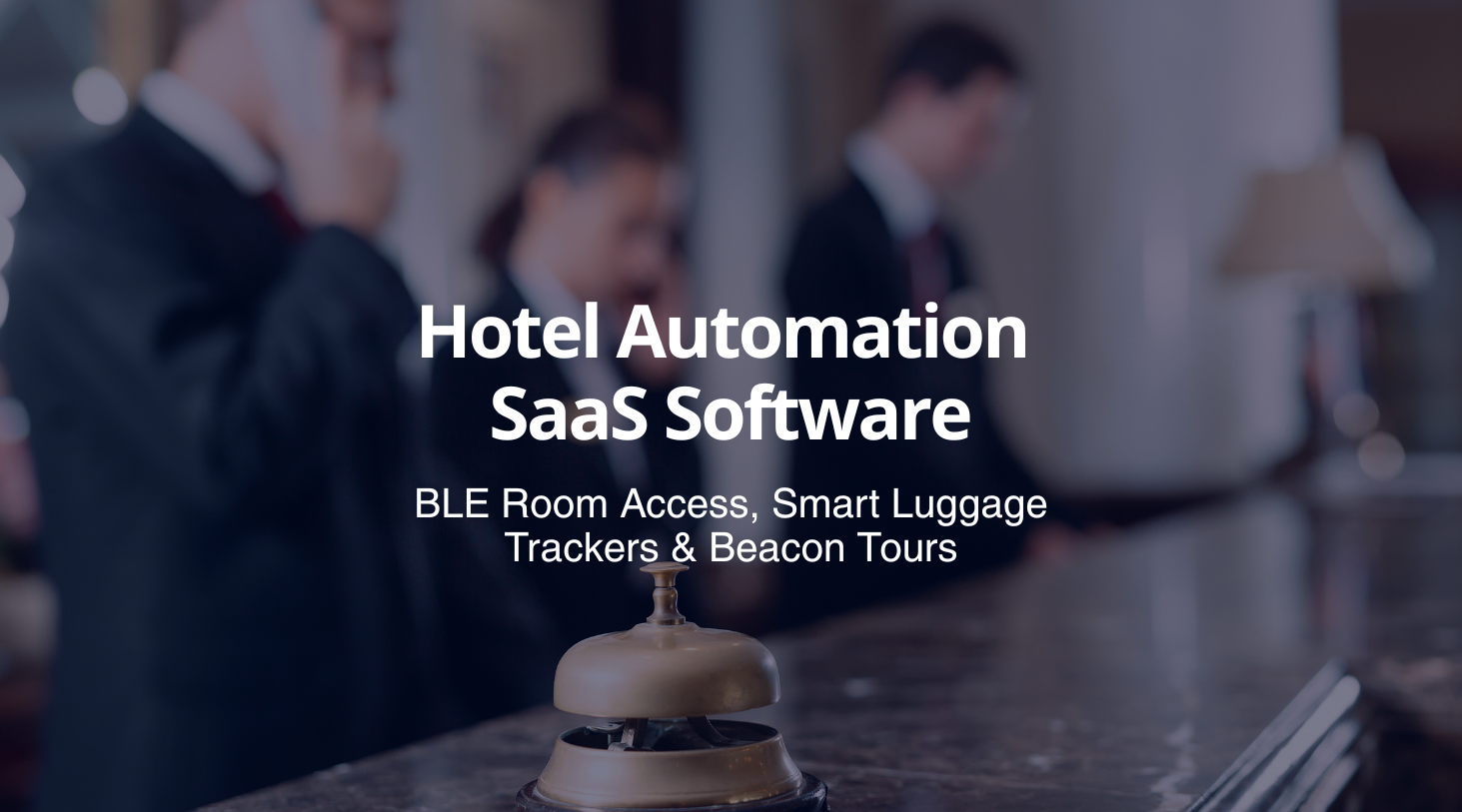
Travel and hospitality operations thrive on speed, predictability, and seamless handoffs between guests, staff, rooms, and assets. That’s exactly why Bluetooth Low Energy (BLE) is so practical here: it connects the physical environment (rooms, zones, luggage, devices) to digital workflows without heavy infrastructure.
In practice, Hotel Automation SaaS Software becomes much more effective when it can “sense” what’s happening on-property in real time. BLE provides that lightweight layer of presence, proximity, and device-status signals, so the platform can automate tasks, reduce exceptions, and improve service consistency.
Where hospitality actually benefits from BLE
Most operational friction happens indoors and during transitions:
-
late arrivals, room changes, lost keys, staff access exceptions;
-
constantly moving items (luggage, carts, maintenance tools);
-
guest experiences that depend on location (tours, resort zones, exhibits).
BLE works well in these conditions because it’s designed for reliable indoor proximity and low-power usage, meaning it scales across a property without needing “enterprise-level” hardware everywhere.
BLE is the input. The platform is the value.
BLE alone doesn’t produce ROI. ROI appears when you build a platform that converts BLE events into clear workflows:
-
access rules (who can enter where and when);
-
automations (check-in triggers, housekeeping tasks, incident alerts);
-
dashboards (visibility for ops teams, device health, exceptions);
-
integrations (property and guest systems).
This is where custom SaaS development services make sense, not to “build an app,” but to productise these workflows so they’re repeatable across properties.
How hotel automation maps to BLE use cases
Here’s what a practical implementation looks like:
|
Scenario |
BLE signal/source |
What the platform does |
Result |
|
BLE room access |
Phone - lock proximity, door events |
Rules + audit trail + staff permissions |
Fewer front-desk issues, safer access |
|
Smart luggage tracking |
BLE tag sightings, gateway pings |
Chain-of-custody timeline + alerts |
Faster recovery, fewer loss claims |
|
Beacon tours / on-property guidance |
Zone entry/exit |
Trigger content, navigation, offers |
Higher engagement, smoother flow |
|
Housekeeping coordination |
Room/zone status signals |
Auto-tasking + exceptions |
Faster turnover, fewer miscommunications |
|
Asset tracking (carts/tools) |
Tag snapshots |
Inventory + utilisation reports |
Less waste, fewer duplicate purchases |
Why end-to-end delivery matters
Hospitality projects break when the solution is split across too many vendors (locks here, tracking there, dashboards elsewhere). A single team owning the workflow end-to-end reduces operational gaps, especially when you need both mobile apps (guest/staff) and web dashboards (ops/admin), plus integrations and monitoring.
Smart Luggage: Trackers & Bluetooth Locks as a Travel SaaS Use Case
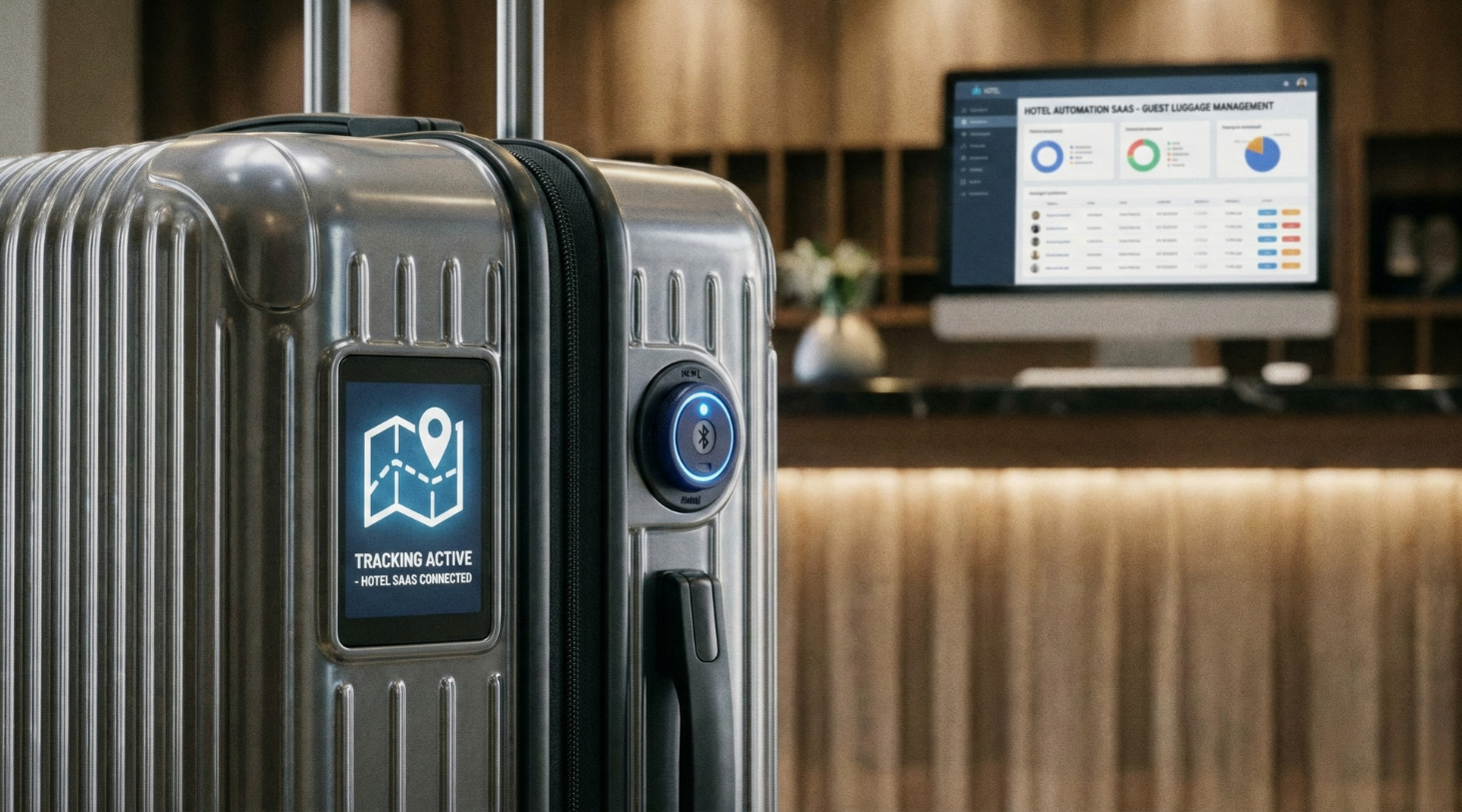
Smart luggage looks like a consumer feature on the surface, but in travel & hospitality, it’s an operational tool: fewer “lost item” tickets, smoother handoffs, and clearer responsibility when luggage moves between:
-
guest;
-
bell desk;
-
storage;
-
room;
-
transport.
The most valuable implementations treat trackers and Bluetooth locks as part of Hotel Automation SaaS Software, not as standalone gadgets.
What “smart luggage” means in hospitality operations
In a hotel/resort flow, the goal usually isn’t “GPS-level tracking.” It’s verified proximity + chain-of-custody:
-
Where was the bag last seen on the property? (lobby, storage, elevator bank, floor zone)?
-
Who handled it last? (staff role, shift, checkpoint)?
-
Was it stored and released correctly? (time stamps + rules)?
BLE is strong here because it supports indoor zone detection, low power, and scalable deployments without heavy infrastructure.
Trackers vs Bluetooth locks: different jobs
Trackers and locks solve different risks, and combining them creates a clean SaaS workflow.
|
Component |
Best for |
Typical BLE signal |
What the SaaS platform should store |
|
BLE luggage tracker/tag |
Location visibility + loss prevention |
Sightings / RSSI proximity/gateway pings |
Last-seen zone, movement timeline, anomaly alerts |
|
Bluetooth lock |
Access control + tamper events |
Lock/unlock events, failed attempts, tamper alerts |
Access logs, staff/guest permissions, exceptions |
The workflow that makes it a full SaaS product, not a demo
The best travel SaaS use case is a repeatable operational loop:
Check-in/drop-off
The bag is tagged and assigned to a guest reservation or room (without exposing sensitive details to everyone).
-
Chain-of-custody events
Every meaningful handoff generates an event: received - stored - moved - delivered - closed. -
Exceptions and alerts
The system flags what staff actually care about:
-
bag leaves approved zones;
-
no sighting for X minutes during a delivery task;
-
lock tamper / repeated failed unlock attempts;
-
wrong-room delivery pattern (zone mismatch).
-
Audit trail + support
A clean timeline shortens disputes and reduces staff time when guests ask: “Where is my luggage?”
This is exactly where SaaS application development services matter: building the rules, roles, dashboards, and integrations that make the workflow reliable across shifts and properties.
Technical approach (kept practical)
A production-ready approach typically looks like:
-
Data capture: staff mobile app scanning + optional fixed gateways in high-traffic zones (lobby, storage, elevator banks).
-
Event processing: de-duplication + confidence scoring (BLE is noisy).
-
Rules engine: zone policies, time thresholds, role-based actions.
-
Interfaces: staff task view (mobile) + ops dashboard (web) + audit exports.
-
Integrations: PMS/task system hooks (so luggage tasks align with room readiness and check-in flow).
If you treat this as a SaaS product development service, you end up with a workflow you can reuse property-to-property (and sell as a platform). If you treat it as “connect a tracker,” you get a pilot that doesn’t scale.
MVP scope that validates demand (without overbuilding)
To avoid scope creep, a strong SaaS MVP development for smart luggage usually proves one loop end-to-end:
-
3-5 zones (lobby, storage, elevator, key floor, delivery completion);
-
a simple chain-of-custody timeline;
-
2-3 alerts (lost-in-transit, left-zone, no-sighting threshold);
-
one staff mobile flow + one ops dashboard view.
That’s enough to prove reduced tickets and faster resolution, then you can expand to multi-property rollout, deeper analytics, and more automation inside your Hotel Automation SaaS Software platform.
Hotel Automation SaaS Software with BLE: Room Access, Lighting & Climate Control
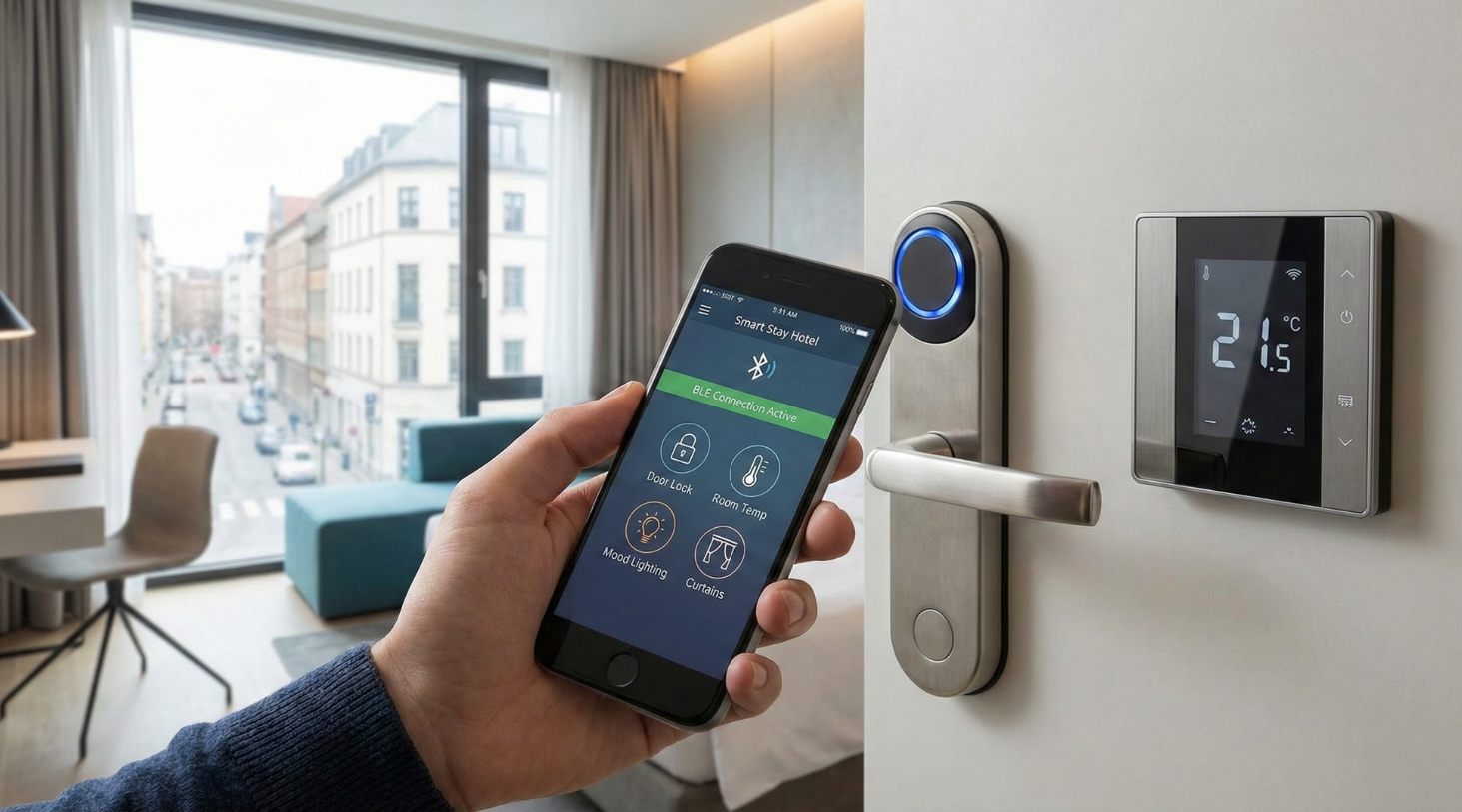
Hotel Automation SaaS Software becomes truly valuable when it manages the room state end-to-end: who can enter, whether the room is occupied, which lighting scene is active, what HVAC mode should run, and how all of that connects to PMS, housekeeping, and energy policies. BLE isn’t “just a lock protocol” here. It’s a presence and identity signal that triggers reliable, configurable room workflows.
BLE Room Access: policy-driven access, not just “open the door”
Hotel access is rarely a simple “issue a key” flow. In real operations you need:
-
Time windows tied to check-in/out (including late checkout rules).
-
Multi-guest access (multiple devices per booking, different rights).
-
Staff roles (housekeeping vs maintenance vs security, zone-based permissions).
-
Fast revocation if a phone is lost, a guest changes, or an incident occurs.
This is where SaaS application development services matter: the value is in centralised access policies, audit logs, and role-based workflows, not in the BLE handshake alone. A scalable platform makes access rules configurable across properties, while door controllers can operate safely with sensible offline fallbacks.
Lighting automation: scenes that map to hotel workflows
Lighting is most successful when it follows operational events, not “random beacon triggers”:
-
Welcome scene after successful entry (brand-consistent lighting + presets per room type).
-
Night mode for safe movement (low-level guidance lighting).
-
Housekeeping mode (bright scene + auto-timeout to avoid energy waste).
-
DND-aware behaviour (avoid disruptive triggers, align with staff workflows).
BLE provides the “someone is here / someone entered” context, while Hotel Automation SaaS Software decides which scene to apply based on room type, booking state, and policies. That’s the SaaS layer doing product work.
Climate control: energy savings without guest complaints
HVAC is where automation can drive strong ROI, if it’s built around modes, not aggressive on/off commands:
-
Pre-conditioning before arrival (based on PMS check-in timing);
-
Occupied mode with comfort setpoints and safeguardrails;
-
Away mode when the room is likely empty (efficient, not disruptive);
-
Maintenance mode for engineering checks and fault isolation.
BLE can contribute occupancy signals, but production-grade systems usually combine BLE with other inputs (door events, motion sensors, controller status) to avoid false assumptions. This is where custom SaaS development services are invaluable: designing robust event logic and implementing graceful degradation.
What the platform must support to scale beyond a demo
The real differentiation is operational scalability, how the system behaves across 200-2,000 rooms.
|
Platform module |
Why it matters |
Typical events/data |
|
Room State (digital twin) |
A single source of truth for room automation |
Occupied/away, last entry, DND, current scene, HVAC mode |
|
Policies & rules |
Configurable access + automation at scale |
Time windows, staff roles, scene rules, energy profiles |
|
Device lifecycle & health |
Support and reliability across hardware fleets |
Pairing history, battery/health, firmware version, last seen |
|
Audit & incident handling |
Security, disputes, and compliance |
Unlock events, denied reasons, overrides, tamper alerts |
|
Ops integrations |
Automation without manual workarounds |
PMS check-in/out, room assignment, housekeeping status |
This is why teams hire a SaaS development company: you’re building a productized operating layer for rooms, not a one-off integration.
A key technical separation that prevents support chaos
To keep systems reliable, it helps to split the solution into two planes:
-
Access plane (doors): minimal dependencies, strict auditing, strong offline behaviour.
-
Automation plane (lights/HVAC): configurable, can degrade safely without breaking entry.
That architecture prevents the classic failure mode where automation goes down, and suddenly doors become a support nightmare, exactly what a full-cycle software development company designs against when delivering production-grade hospitality platforms.
Tourist Guides & On-Property Experiences with Bluetooth Beacons
Bluetooth beacons are one of the cleanest ways to add location-aware guest experiences without forcing users to scan QR codes, type room numbers, or rely on GPS (which is unreliable indoors). In Travel & Hospitality, the goal isn’t “tracking people.” It’s delivering the right information at the right place and letting your Hotel Automation SaaS Software or guest app turn proximity into a useful, privacy-friendly flow.
Where beacons actually win (and where GPS/QR fall short)
Beacons shine in places where guests move through defined spaces:
-
Hotels & resorts: lobbies, elevators, hallways, pools, spas, gyms, conference floors.
-
Museums & venues: exhibit zones, ticket gates, audio guide points.
-
Tourist routes: info points in indoor/outdoor “micro locations” (entrances, viewpoints, partner shops).
Unlike QR, guests don’t need to stop and “do a thing.” Unlike GPS, BLE can work inside buildings and dense areas with fewer false positives.
Core use cases that convert into real product value
A beacon layer becomes valuable when it supports repeatable, measurable guest workflows:
1) Self-guided “micro tours” on the property
Turn a resort into a guided experience:
-
“You’re near the spa: show the menu + availability + book button”;
-
“You’re at the pool: show towel rules + bar menu + promo”;
-
“You’re at the conference hall: show agenda + room map + networking prompt”.
2) City-style tourist guides (partner ecosystems)
Hotels can extend value beyond the building:
-
Partner locations trigger short “what to do here” cards;
-
Vouchers/offers appear only in proximity (reduces abuse);
-
Optional offline download for travellers with roaming restrictions.
3) Queue reduction and smoother navigation
Guests hate uncertainty more than walking:
-
“Elevator bank: route to room/meeting room”;
-
“Breakfast zone: show wait time + overflow seating”;
-
“Reception zone: show self check-in or help prompt”.
4) Contextual support and accessibility
Beacons are especially useful for inclusive design:
-
Step-free routes (elevators/ramps), simplified navigation;
-
“You’re near an accessible entrance: show correct route + desk help”;
-
Quiet notifications for schedule/room changes.
This is a great match for SaaS application development services because it’s not just UI, it’s rules, content management, and analytics across properties.
Technical model: how beacon experiences are built in SaaS
A scalable approach treats beacons as event triggers, not as a “map system.”
Typical flow:
-
Beacon broadcasts an ID (no personal data);
-
Guest app (or property app) scans, estimates proximity (RSSI + smoothing);
-
App emits an event: zone_enter, zone_exit, dwell_time (with confidence score);
-
Cloud backend applies rules + personalization (if allowed);
-
Response returns content/actions: card, route, offer, support prompt;
-
Events feed analytics: engagement, conversion, bottlenecks.
Key engineering details that separate a demo from production:
-
RSSI filtering & stability: reduce “bounce” between zones;
-
Zone design: prefer fewer, meaningful zones over high-granularity triangulation;
-
Confidence scoring: only trigger when the signal is stable enough;
-
Offline fallback: cache “last known” content packs for poor connectivity;
-
Privacy-by-design: avoid storing raw location trails unless required.
This is where custom SaaS development services matter: the backend rules engine + CMS + analytics is the product.
What your platform should include (so ops can run it)
If you want beacon tours to work at scale, the platform needs an operational layer, not just an SDK:
|
Platform capability |
Why it matters in hospitality |
Example |
|
Zone & beacon registry |
Stops chaos across floors/properties |
“Lobby-A”, “Spa-Entrance-2”, “Conference-Hall-North” |
|
Content management (CMS) |
Marketing/ops updates without releases |
Update a spa promo in 2 minutes |
|
Rules engine |
Consistent experiences, fewer false triggers |
“Show offer only on first visit per stay” |
|
Multi-property templates |
Roll out fast across locations |
Clone “Resort Tour Pack” to 12 hotels |
|
Analytics & attribution |
Prove ROI |
Beacon - card view - booking conversion |
|
Support tooling |
Reduce tickets |
“Beacon health”, “last seen”, “misplaced device” |
Building this typically falls under SaaS product development services because it’s a multi-tenant content + rules + analytics system.
MVP scope that validates demand (without overbuilding)
For a first release, aim for one tight loop:
-
8-15 zones (lobby, elevator, breakfast, spa, pool, conference);
-
1 “tour pack” in CMS (cards + CTAs);
-
basic rules (cooldowns, quiet hours, repeat exposure limits);
-
analytics dashboard (views, dwell, conversions);
-
1 integration (PMS/booking engine or in-app booking).
That’s a realistic SaaS MVP scope that can be piloted in one property and then rolled out across multiple locations.
Building a Hospitality SaaS Platform for Hotel Automation SaaS Software
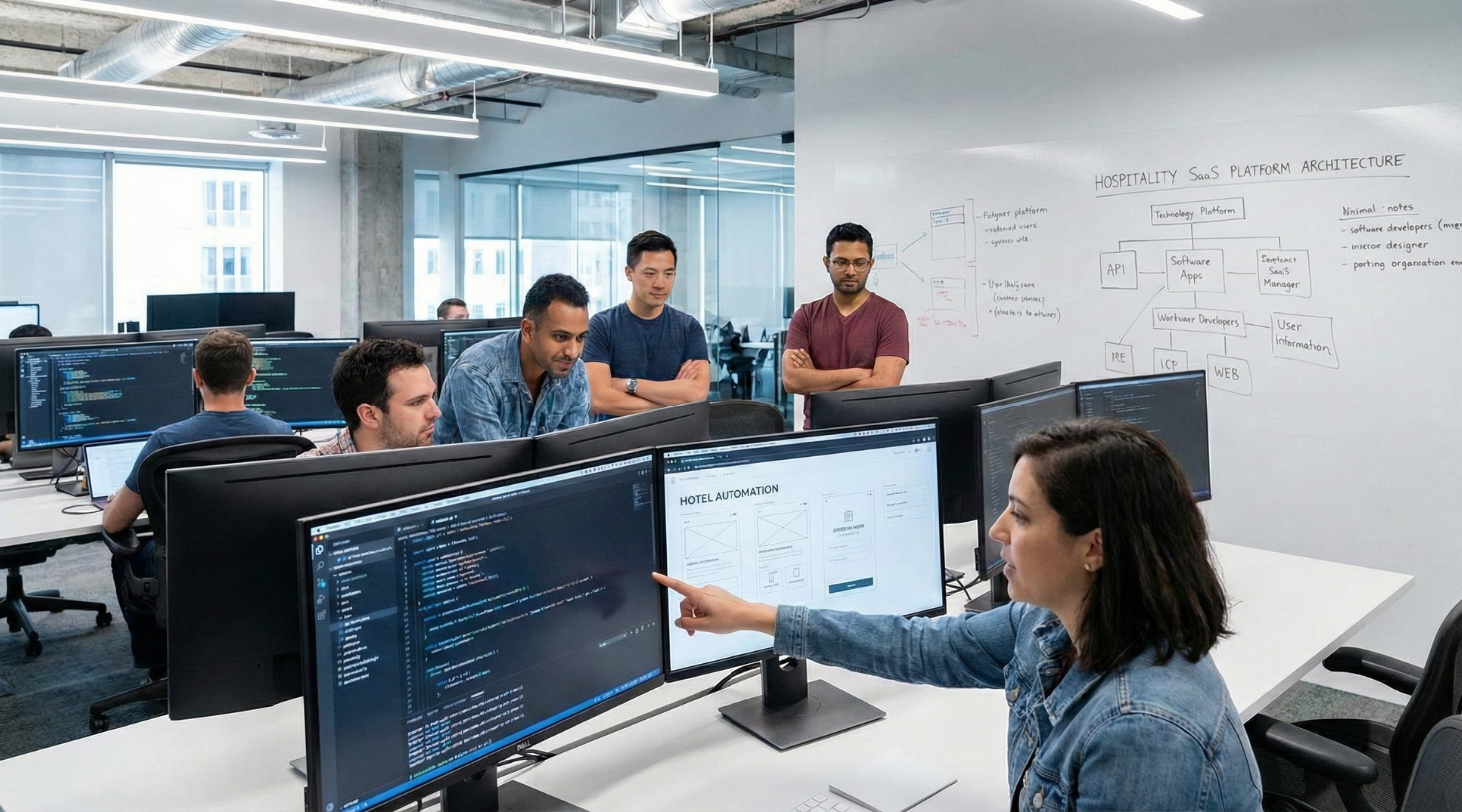
Hotel automation isn’t a “smart lock feature.” It’s a multi-tenant SaaS platform that connects BLE room access, in-room controls, and on-property devices into one operational system: credentials, rules, staff workflows, and auditable events. This is where Hotel Automation SaaS Software becomes a real product you can roll out across properties without turning every hotel into a custom project.
The product reality: hotels are fleet operations, not “apps”
A single property can easily run hundreds of devices: locks, gateways, thermostats, lighting controllers, beacons, and staff mobile devices. If your platform can’t manage this fleet (provisioning, health, logs), automation breaks at scale.
That’s why most teams approach this as SaaS application development services (not hardware setup): the platform is the value.
1) Start with the right data model (so you don’t rebuild later)
Your SaaS platform needs a structure that matches how hotels actually operate:
-
Tenant - Property - Building - Floor - Room;
-
Staff users + roles (front desk, housekeeping, engineering, manager);
-
Guest stay/reservation (linked to PMS);
-
Devices (lock, gateway, thermostat, lighting controller, beacon);
-
Credentials (mobile key, staff key, emergency/override key);
-
Policies (who can access what, when, under what conditions);
-
Events (unlock attempt/success, battery low, forced door, zone enter/exit).
This model is what enables multi-property configuration and prevents “one-off logic per hotel.”
2) Build BLE room access as a lifecycle, not a button
BLE Room Access becomes reliable when you treat it as a controlled lifecycle:
Guest keys
-
issued only when PMS confirms check-in/room assignment;
-
time-bounded (check-in/checkout window);
-
instantly revocable (room change, checkout, incident).
Staff keys
-
role + shift-based access (e.g., housekeeping: assigned rooms today 10:00-18:00);
-
emergency access with strict logs and escalation.
Key platform principle: revocation-first. If the PMS changes, access must be updated immediately; otherwise, you create “ghost access.”
3) Device management is mandatory (this is where most pilots fail)
A scalable Hotel Automation SaaS Software platform needs fleet-grade tooling:
-
Device registry (identity, firmware, room mapping);
-
Provisioning + replacement flows (swap lock, reassign gateway, “new room controller”);
-
Health telemetry (battery, last seen, signal quality, error codes);
-
Remote diagnostics (“why didn’t Room 512 open?”) with a single timeline view.
This is the difference between a demo and a platform that survives real hotel operations. One reason teams hire custom SaaS development services is that they can stitch vendor dashboards together.
4) Event pipeline: normalise everything into one schema
BLE and IoT signals are noisy. Your SaaS platform must turn vendor-specific data into consistent events:
-
Ingestion (mobile app/gateways/vendor webhooks);
-
Normalisation (map to your event types);
-
De-duplication + confidence scoring (RSSI jitter, repeats, stale timestamps);
-
Storage:
-
current state (room/device status)
-
immutable event log (audit + analytics)
5) Rules engine: where automation actually lives
Automation shouldn’t be hard-coded. Hotels need configurable rules:
-
Check-in confirmed: issue mobile key.
-
First room entry: apply comfort preset (lighting + climate).
-
Checkout passed: revoke guest access + revert room preset.
-
Battery low: create maintenance ticket + notify engineering.
-
Restricted zone entry: alert security + log incident.
A good rules engine also includes throttling (no notification spam), exceptions (VIP/maintenance), and an audit trail (“rule X triggered action Y”).
6) PMS integration: define “source of truth”
This is a common architectural split:
-
PMS = source of truth for stays (reservation, room assignment, check-in/out)
-
Your SaaS = source of truth for credentials + automation (keys, policies, rules, audit)
This keeps the platform consistent and prevents access from drifting out of sync.
Platform modules (what you actually build)
This table works well in the article as a “quick scan” block (and often helps snippet visibility):
|
Module |
What it does |
Why it matters for hotels |
|
Access & Identity |
Guest/staff keys, RBAC, audit logs |
Safe issuance + instant revocation |
|
Device Management |
Provisioning, room mapping, and health |
Prevents support chaos at scale |
|
Event Pipeline |
Ingestion + normalization + storage |
Makes vendor data usable and consistent |
|
Rules Engine |
Automations, schedules, exceptions |
Turns events into outcomes |
|
PMS Integration |
Sync stays and room assignment |
Keeps access aligned with reality |
|
Staff Console |
Front desk + ops + troubleshooting |
Faster resolution, fewer escalations |
|
Guest Experience |
Mobile key UX + fallback flows |
Fewer “can’t open door” incidents |
Concrete example + budget (realistic MVP scope)
Scenario: 1 boutique hotel, ~60 rooms, BLE locks + basic lighting/climate presets.
MVP scope (12-16 weeks)
-
Multi-tenant + property/room model;
-
PMS integration (room assignment + check-in/out);
-
Guest key issuance/revocation;
-
Staff web console (front desk) + audit log;
-
Device registry + health monitoring;
-
1-2 automation rules (e.g., first entry: comfort preset; checkout: revoke + reset).
Typical budget: $50,000-$120,000
Depends mostly on PMS complexity, lock vendor APIs, and whether gateways/edge are required.
If you’re planning a multi-property rollout, this is where a full-cycle software development company is valuable: you’re not just shipping features, you’re building an operational platform that can scale.
From Pilot to Multi-Property Rollout (Technical Playbook)
A pilot proves Bluetooth can open a door. A rollout proves your Hotel Automation SaaS Software can operate across properties with predictable uptime, support, and security. The difference isn’t BLE range, it’s the SaaS layer: tenancy, policy control, observability, and integration resilience.
1) Define “pilot success” as system behaviour, not a demo
Before scaling, lock down measurable technical KPIs. Otherwise, you’ll ship assumptions.
Core pilot KPIs (practical):
-
Unlock success rate: ≥ 99% for valid credentials (separate iOS/Android);
-
Median unlock time: < 1.5s (p95 < 3s) end-to-end (app - lock);
-
Credential issuance latency: < 10s after PMS check-in event;
-
Offline tolerance: credentials cached; unlock works without a network;
-
Incident resolution: support can diagnose from logs without reproducing onsite.
This forces the platform to behave like a product, not a prototype.
2) Architecture shift: single hotel, multi-tenant SaaS development
Multi-property rollout starts when your backend stops being “a project” and becomes a multi-tenant system of record.
Minimum tenant model:
-
Tenant: hotel group/operator;
-
Property: hotel instance (config boundary);
-
Unit: room/door/zone;
-
Device: lock/gateway/beacon/sensor;
-
Actor: guest/staff/system integration (PMS).
Non-negotiable SaaS primitives:
-
Tenant isolation: data + config + audit trails segregated;
-
Config layering: group defaults - property overrides - room exceptions;
-
RBAC: front desk vs housekeeping vs engineering vs admin;
-
Audit logs: immutable event trail for access and overrides.
This is where custom SaaS development services actually pay off: it’s not BLE integration, it’s platform governance.
3) Treat access as a policy engine, not a feature
Rollouts fail when access rules live in code or in scattered vendor consoles. You need a central policy layer.
Policy engine should support:
-
Time windows (check-in/out, late checkout, staff shifts);
-
Role constraints (housekeeping doors, engineering areas);
-
Overrides (VIP, emergency, lockout) with mandatory reason + logging;
-
Revocation semantics (instant vs next-sync) + reconciliation.
Practical implementation:
-
Policies stored as versioned configs (with rollback);
-
Evaluated server-side for issuance + client-side for cached unlock rules;
-
Every decision produces an auditable “why” record.
4) Device fleet operations: locks become infrastructure
At 1 hotel, “replace the lock” works. At 10 hotels, you need fleet tooling.
Device ops layer should include:
-
Provisioning: device registration, room binding, and key rotation.
-
Health: battery, uptime, gateway reachability, RSSI patterns, firmware version.
-
Diagnostics: last-seen, failure codes, retry patterns, BLE handshake stats.
-
Safe rollout strategy: staged firmware/config releases with canaries.
If you don’t build this, scaling multiplies support tickets linearly with rooms.
5) Integration hardening: PMS is the source of truth (but not always correct)
Multi-property means multiple PMS vendors, edge cases, and imperfect data. Your platform must be resilient.
You need:
-
Event ingestion with idempotency (no duplicate key issuance);
-
Retry + backoff (network and PMS outages happen);
-
Reconciliation jobs (daily “PMS vs platform state” diff);
-
Conflict handling (room moves, early check-in, back-to-back stays);
-
Observability on integration lag and failure reasons.
Rule of thumb: if a front desk action doesn’t reflect in access within minutes, staff will bypass the system permanently.
6) Observability that explains failures in one screen
At scale, your highest cost is not development, it’s diagnosing “guest can’t open the door.”
Build an event timeline per room/user session:
PMS event (check-in):
-
credential issued;
-
delivered to the device;
-
unlock attempt;
-
success/fail + reason (BLE handshake, auth, policy, device health).
Minimum logging taxonomy:
-
Auth failures (revoked/expired/role mismatch);
-
BLE handshake failures (timeout, incompatible version, signal);
-
Device failures (battery low, jam, offline gateway);
-
Policy failures (outside window, not assigned room);
-
Delivery failures (push not received, cache stale).
This is where a SaaS development company earns trust: the platform can self-diagnose.
Rollout plan (what actually changes by phase)
Phase A: Pilot (1 property, 6-10 weeks)
Ship the smallest complete loop:
-
Mobile key issuance + unlock;
-
Staff access + overrides;
-
PMS integration (check-in/out + room change);
-
Audit log + basic health.
Typical budget: $50k-$120k
Phase B: Productise (2-4 weeks)
Turn the pilot into a repeatable deployment:
-
Tenant model + config templates;
-
RBAC + policy versioning;
-
Runbooks + support tooling v1.
Typical budget: $40k-$90k
Phase C: Multi-property (3-5 properties, 8-12 weeks)
Harden for scale:
-
Fleet monitoring + diagnostics;
-
Integration reconciliation;
-
Observability dashboards + incident workflows.
Typical budget: $100k-$220k
Phase D: Multi-property rollout (10+ properties, ongoing)
Now onboarding becomes ops-driven:
-
Standard property onboarding checklist;
-
Controlled releases (canary/staged);
-
Continuous improvements based on incident data.
Ongoing ops: from $2k/month (infra + support tooling + roadmap)
Key takeaway
To scale Hotel Automation SaaS Software, BLE is the smallest piece. The platform wins or fails on:
-
multi-tenancy;
-
policy control;
-
fleet operations;
-
integration resilience;
-
observability.
If your SaaS layer can’t explain an unlock failure instantly, every new property will increase chaos, not revenue.
If you’re moving from a one-property pilot to a reliable multi-property rollout, Join.To.IT can help you build the Hotel Automation SaaS Software the right way: secure multi-tenant SaaS architecture, BLE access flows, PMS integrations, device fleet operations, and observability that reduces support load at scale.
We typically start with discovery + a focused MVP, then harden the platform for repeatable deployments across properties.
See our software for hotels and resorts and how we approach SaaS development for hospitality products.