Custom Software Development · Chicago, IL

Custom Software Development Company in Chicago

Join.To.IT is a custom software development company that Chicago firms bring in when spreadsheets, email and an aging core system are holding up daily work. We replace the manual steps first and connect to the systems that stay. Our engineers work with Chicago clients remotely.

  • Shipper portals connected to your TMS
  • New workflows around old systems, not rip-and-replace
  • Weekly demos for operations, finance and IT
How we start Custom Software Development for Chicago
  1. 01 Discovery call
  2. 02 Scope and architecture
  3. 03 MVP build
  4. 04 Integrations and QA
  5. 05 Launch and growth

Working around systems that still run the business

Chicago has a lot of companies that have been in business for decades. Freight brokers and distributors grew up around the rail yards and interstates, trading firms cluster near LaSalle Street, insurance carriers and agencies fill the suburbs, and the Loop is full of law and accounting firms. Many of them run on an ERP or policy system installed long ago, with spreadsheets and email filling the gaps. The core system still works. The gaps are where the hours go.

So we rarely propose replacing everything. In discovery we sit with the people doing the work, list each manual step and trace where its data comes from. Then we build the new workflow, often a portal or an intake tool, and connect it to the existing system through its API, a database view or scheduled file exports. If the old system later becomes the real bottleneck, we modernize it in phases while orders keep flowing.

Typical custom software development projects in Chicago

01

Shipper portal for a freight broker

Customers request quotes, book loads, track shipments and download PODs and invoices without calling dispatch. The portal reads from your TMS and accounting system, so staff keep working in the tools they already use.
02

Commercial lines intake for an insurance agency

One intake form instead of re-keying data into several carrier portals, with underwriting questions that change by line of business, document generation, e-signatures and an audit log on every submission.

03

Engagement portal for an accounting firm

Clients upload documents against a checklist, see where their return or audit stands, sign engagement letters and pay invoices. Staff get reminders about missing items instead of chasing them by email.

What custom software costs a Chicago business

We quote fixed-price packages after discovery, so finance can approve one number. Support and smaller changes after launch run at $25–50 per hour.

Package Proof of concept MVP Market ready Enterprise
Price From $2,400 From $9,600 From $28,800 From $57,600
Typical timeline 2–4 weeks 2–4 months 4–8 months 8+ months
Common Chicago scope A working prototype of one workflow, such as quote intake, reading live data from your ERP or TMS A first portal or internal tool for one team, replacing its spreadsheet and email steps A customer-facing portal with payments, documents and two or three system integrations Phased replacement of a core system, running alongside the old one until cutover

Technologies

  • React, Vue, Next.js
  • Node.js, Laravel, Python, .NET
  • PostgreSQL, MySQL
  • AWS, Azure, Google Cloud
  • Docker, Kubernetes, CI/CD
  • Salesforce, HubSpot, QuickBooks, NetSuite integrations
  • OpenAI and other LLM APIs
  • Flutter and React Native for mobile clients
Collaboration

Working with Chicago teams

Our engineers keep U.S. business hours, so a question for your operations lead or your ERP admin gets settled the same day. Projects here often need sign-off from several departments, so each sprint ends with a short demo where every group checks its own part.

Our U.S. operations are facilitated through Orcatec LLC, our trusted American business partner, enabling seamless collaboration with clients across the United States.

Frequently asked questions

Our Chicago company runs on an older ERP. Can you integrate with it?

Usually, yes. NetSuite, Microsoft Dynamics, SAP Business One, Epicor and similar systems have APIs or at least reliable exports. For older or heavily customized installs, we agree during discovery on a read-only database view or a scheduled file exchange, test it against a copy of your data and add monitoring so a failed sync is noticed the same morning.

Can you build a customer portal for a Chicago freight broker or 3PL?

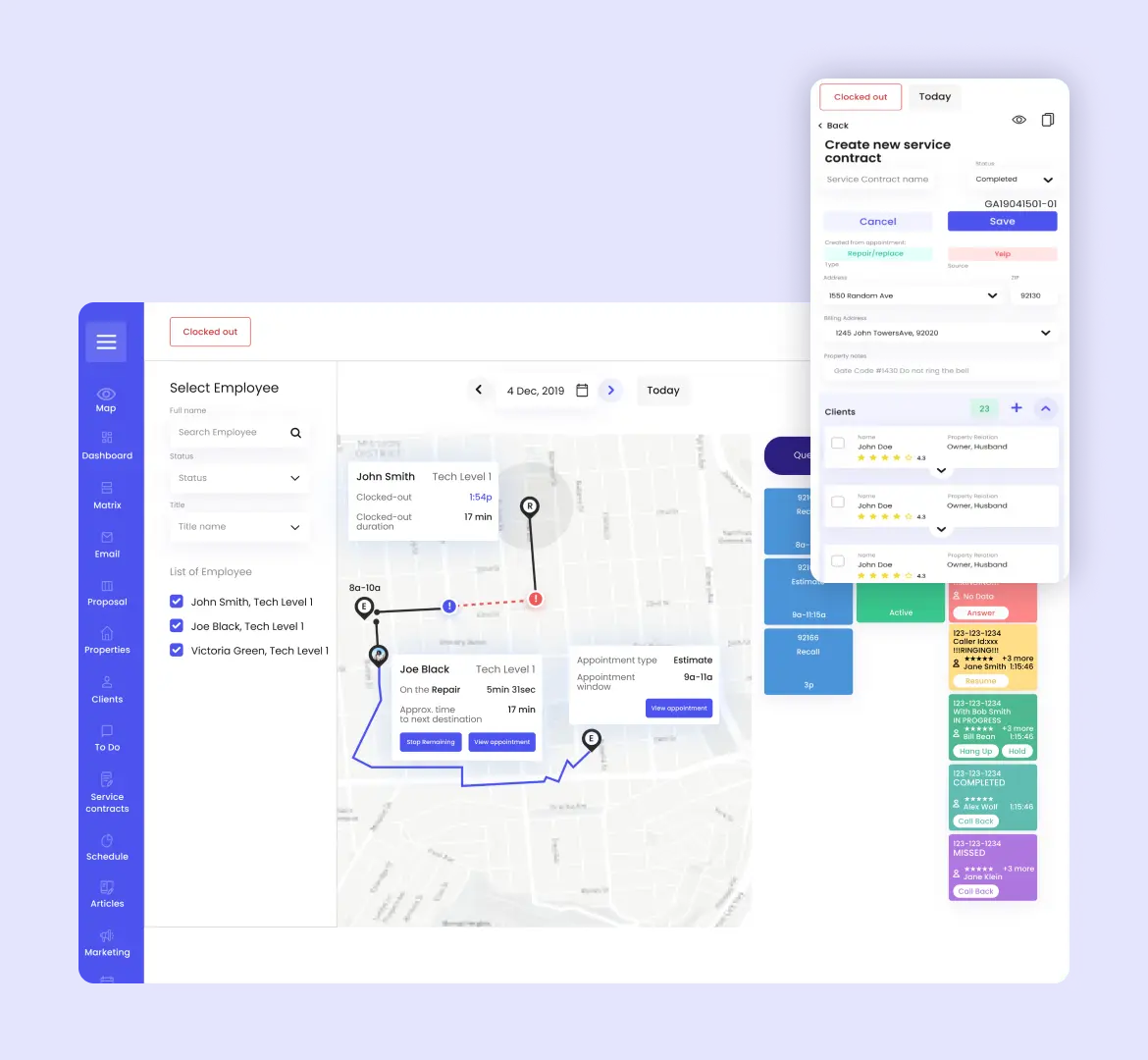
Yes. Shippers get quotes, bookings, live status, PODs and invoices in one place, and your team stops answering status calls. The portal pulls from your TMS and accounting system. Our Orcatec case, a field-service platform with many integrations, is the same kind of work: several systems feeding one interface that customers and staff use daily.

We are an insurance agency in the Chicago suburbs. Do we have to replace our agency management system?

Usually not. Most agencies get more from an intake and workflow layer that sends clean data into the system they already have. We check what your AMS allows through its API or imports, then build around it. Replacement makes sense only when the old system blocks something the business needs, and then we plan it in phases.

Can a Chicago law or accounting firm keep client documents secure in a portal?

Yes. We use encrypted storage, access by client and matter, single sign-on for staff, download logs and the retention rules your firm sets. Your IT or compliance team reviews the setup before launch. The portal can also handle engagement letters, e-signatures and invoice payments, which removes most of the email traffic around a matter.

What drives the cost of custom software for a Chicago company?

Mostly the number of systems we connect to and the state of their data. A clean NetSuite API is quick to work with; a custom export from a decades-old AS/400 takes longer. A proof of concept starts at $2,400 and an MVP at $9,600. A market-ready platform starts at $28,800, and an enterprise system replacement at $57,600.

Start with one workflow

Pick the process that costs your team the most hours each week and tell us how it runs today. We will show you what software would change and what it would cost.

What happens next

  1. 1
    Tell us where you are

    Describe the product, what exists today, and what it needs to do next. Ask for an NDA on the form if you want one first.

  2. 2
    Hear back from us

    We come back with questions or a suggested next step, and talk it through on a call if that helps.

  3. 3
    Agree on the first step

    An engagement model, and what we need to give you a reliable estimate.

No obligation. NDA available.