

What Is an AI SaaS App Development for Property Management Companies?
AI SaaS app development for property management companies focuses on building cloud-based platforms that help property managers automate daily operations across leasing, maintenance, tenant communication, reporting, and portfolio management. Unlike traditional property management software, an AI-powered SaaS product does not only store data or organize tasks. It uses AI to analyze requests, classify information, suggest actions, generate summaries, and support faster decisions across the entire property lifecycle.
For property management companies, the value of such a product is not in “adding AI” as a separate feature. The real value comes from connecting AI with operational workflows. A tenant sends a maintenance request, the system detects the issue type, checks urgency, creates a work order, assigns the right vendor, and updates the tenant automatically. A prospective renter asks about availability, and the app can qualify the lead, suggest a showing time, collect documents, and move the person closer to signing a lease. This is where AI property management software becomes more useful than a standard dashboard.
Roles, permissions, and SaaS scalability
From a product perspective, AI SaaS app development for this niche usually includes several user roles. Property managers need dashboards, task queues, reports, and approval tools. Tenants need a simple portal for payments, messages, lease documents, and maintenance requests. Property owners need visibility into occupancy, income, expenses, and performance. Vendors need access to assigned work orders, schedules, job details, and status updates. A strong SaaS platform connects these roles in one system without exposing unnecessary data to the wrong users.
The SaaS model is especially important for property management companies that manage multiple buildings, owners, locations, or rental units. Instead of installing separate software for every property, teams can work from one cloud-based platform with shared access, role-based permissions, centralized reporting, and subscription-based pricing. This makes the product easier to scale as the portfolio grows.
The AI layer can support different parts of the platform, including:
-
leasing automation and lead qualification;
-
tenant screening support;
-
maintenance request classification;
-
work order routing;
-
automated tenant communication;
-
lease and document summaries;
-
rent and occupancy analytics;
-
portfolio performance insights;
-
predictive maintenance alerts;
-
owner report generation.
However, custom property management software should not rely on AI alone. Property data is sensitive, and many workflows affect payments, housing decisions, legal documents, and service quality. That is why the system should include human approval, audit logs, clear permissions, and manual override options. AI can speed up repetitive work, but property managers still need control over final decisions.
Human control and system integrations
A well-planned property management software development process starts with the workflows, not the technology stack. Before choosing an AI model, development teams need to define what the app should automate, where human review is required, what data the system can use, and which integrations are necessary. In many cases, the app must connect with accounting tools, payment providers, CRM systems, tenant databases, maintenance platforms, or existing property management systems.
This is why an AI SaaS app for property management companies should be designed as an operational platform, not just an AI assistant. The strongest products combine SaaS architecture, workflow automation, data security, integrations, and AI features that solve specific problems for leasing teams, maintenance coordinators, tenant support teams, and property owners.
Core AI Property Management Software Features for Leasing, Payments, Maintenance, and Reports
Core modules for property operations
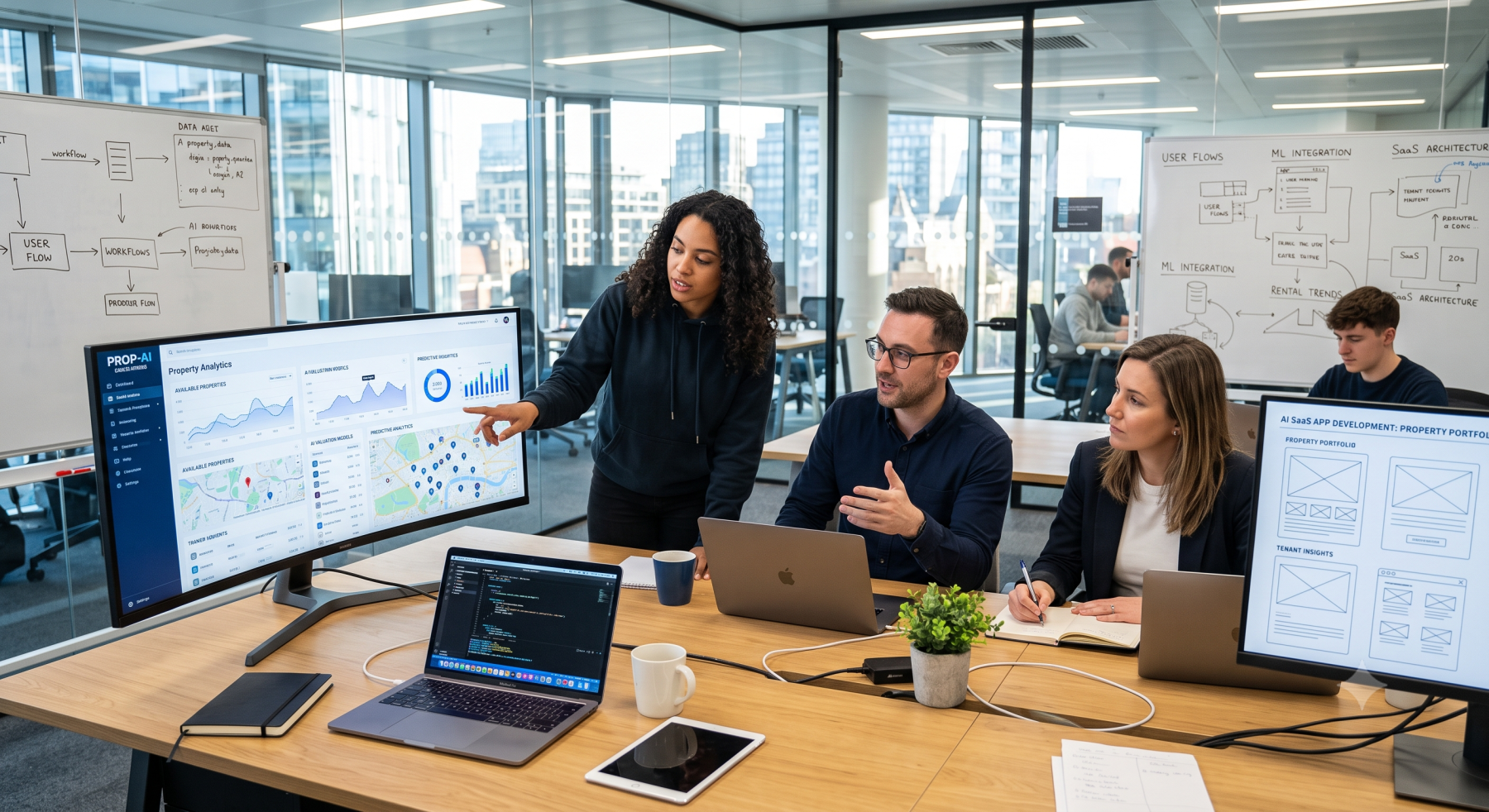
The feature set of AI property management software should be based on the workflows that create the most daily workload: unit management, leases, payments, maintenance, documents, reporting, and team coordination. AI should not be added as a separate “smart” layer. It should improve specific actions inside these workflows, such as summarizing lease data, detecting overdue tasks, classifying service requests, preparing reports, and helping managers act faster.
For AI SaaS app development, the first version should focus on the modules that support the full property management cycle. These include property and unit records, tenant profiles, lease management, online payments, maintenance requests, document storage, notifications, reporting, and role-based access. Once these workflows are stable, more advanced AI features can be added without making the product too complex from the start.
Property data, leases, and payments
Property and unit management is the foundation of the system. The platform needs structured data about buildings, apartments, availability, rental terms, lease dates, rent amounts, deposits, and occupancy status. Without clean property data, automation and AI-driven insights will be unreliable.
Lease management is another essential part of custom property management software. The app should help teams store, search, and track lease agreements, while AI can summarize key terms, extract renewal dates, identify missing fields, and prepare reminders. The goal is not to replace legal review, but to reduce repetitive document checks and missed deadlines.
Payment functionality is also important for a complete property management SaaS product. The system should support rent balances, online payments, recurring invoices, overdue payment tracking, deposits, and payment history. AI can help detect unusual payment patterns, highlight accounts that need attention, and prepare short financial notes for internal reports or owner updates.
Maintenance, documents, and reporting
Maintenance management should be included early because it affects tenant satisfaction, operating costs, and team workload. The platform should support request submission, attachments, status tracking, priority levels, work orders, vendor assignment, and repair history. This is where property management automation software can reduce manual coordination and make service requests easier to manage at scale.
Document management should also be part of the core product, not an extra feature. Property management companies work with leases, applications, IDs, invoices, inspection reports, vendor files, insurance documents, and owner agreements. The platform should support secure storage, tagging, search, access permissions, and version history, while AI can help extract key details and make documents easier to find.
Reporting and analytics should turn daily operations into clear business insights. Instead of showing only static tables, the platform can highlight rent collection trends, maintenance costs, lease expirations, occupancy changes, open tasks, and portfolio performance. AI can summarize these reports, explain unusual changes, and make data easier to understand for managers and property owners.
Advanced AI features after the MVP
Advanced features should come after the core workflows are working reliably. These may include AI leasing assistants, predictive maintenance, rent forecasting, portfolio analytics, accounting integrations, vendor performance tracking, and multi-property benchmarking.
The main goal of property management software development is not to overload the product with AI features from the beginning. The goal is to build a reliable platform where AI improves repetitive, time-sensitive workflows. When the feature set is based on real leasing, payment, maintenance, document, and reporting needs, the app becomes easier to adopt, easier to scale, and more valuable for property management companies.
AI Leasing Software for Lead Capture, Tenant Screening, and Lease Automation
Lead capture and qualification
Leasing is one of the strongest use cases for AI in property management because it includes many repetitive but time-sensitive steps: answering inquiries, qualifying leads, scheduling showings, collecting documents, reviewing applications, and preparing lease records. Well-designed AI leasing software helps property management companies move faster from the first inquiry to a signed lease while keeping sensitive decisions under human control.
Rental inquiries may come from a company website, listing platforms, email, social media ads, phone calls, or chat widgets. Instead of keeping these requests in separate channels, the platform can collect them in one leasing dashboard. An AI leasing assistant can then organize inquiries by property, unit type, budget, move-in date, location preference, and urgency.
For example, if a prospective tenant asks, “Is the two-bedroom unit available for September?” the system can check availability, ask follow-up questions, suggest open showing slots, and send the leasing team a short summary. This reduces manual back-and-forth and helps managers respond before the lead loses interest.
Tenant screening support and human review
Lead qualification is a practical use case for leasing automation software. The app can ask about move-in timeline, household size, budget range, pets, parking needs, and preferred lease length. Based on these answers, leasing teams can understand which applicants are ready to move forward, which ones need more information, and which units may fit their needs.
AI should not approve or reject applicants automatically. Decisions related to housing, eligibility, and tenant selection must remain transparent and controlled by authorized people. Tenant screening automation should support the process by organizing documents, checking whether required fields are complete, flagging missing information, and preparing an application summary for final review.
Practical lead-to-lease workflow
A practical leasing workflow inside AI property management software may look like this:
|
Leasing stage |
What AI can automate |
Human control |
|
Lead capture |
Collects inquiries from website forms, listing platforms, email, chat, or ads and organizes them in one dashboard. |
The leasing team checks lead quality and decides next steps. |
|
Lead qualification |
Asks about budget, move-in date, unit preferences, pets, parking, and lease length. |
The manager reviews whether the lead matches available units. |
|
Showing scheduling |
Suggests available time slots and sends booking links or reminders. |
The team confirms availability and handles exceptions. |
|
Application collection |
Sends document upload links and checks whether required fields are complete. |
Manager reviews submitted documents before screening. |
|
Tenant screening support |
Organizes application data, flags missing information, and prepares a summary. |
Final approval or rejection stays with the authorized specialist. |
|
Lease preparation |
Pulls tenant, unit, rent, deposit, and renewal details into the lease record. |
The team verifies terms before sending documents for signature. |
|
Follow-up automation |
Sends reminders about missing documents, unsigned leases, or upcoming move-in steps. |
The manager handles sensitive cases or custom negotiations. |
Lease automation and product logic
Lease automation becomes valuable after an applicant is approved. The platform can prepare lease records, insert property and tenant details, track required documents, highlight missing information, and summarize lease terms, renewal dates, deposit rules, rent amounts, and special conditions for internal review.
For property management companies with many units, lead-to-lease automation reduces delays between marketing, showing, application review, and lease signing. Without this connection, teams often lose qualified leads because responses are slow, documents are incomplete, or follow-ups are missed.
For AI SaaS app development, the leasing module should be designed around clear user actions, not only AI prompts. Property managers need to see lead status, communication history, application progress, required documents, showing schedules, and pending approvals. Applicants need a simple flow where they can ask questions, book a visit, upload documents, and receive updates without contacting the team multiple times.
The strongest leasing features are not the ones that replace a leasing manager. They are the ones that remove routine coordination, reduce response time, and make every application easier to review. When AI supports lead capture, tenant screening, and lease preparation in one connected workflow, property management companies can lease units faster while keeping control over final decisions.
Maintenance Request Automation and Property Maintenance Automation for Work Orders
Turning maintenance requests into structured data
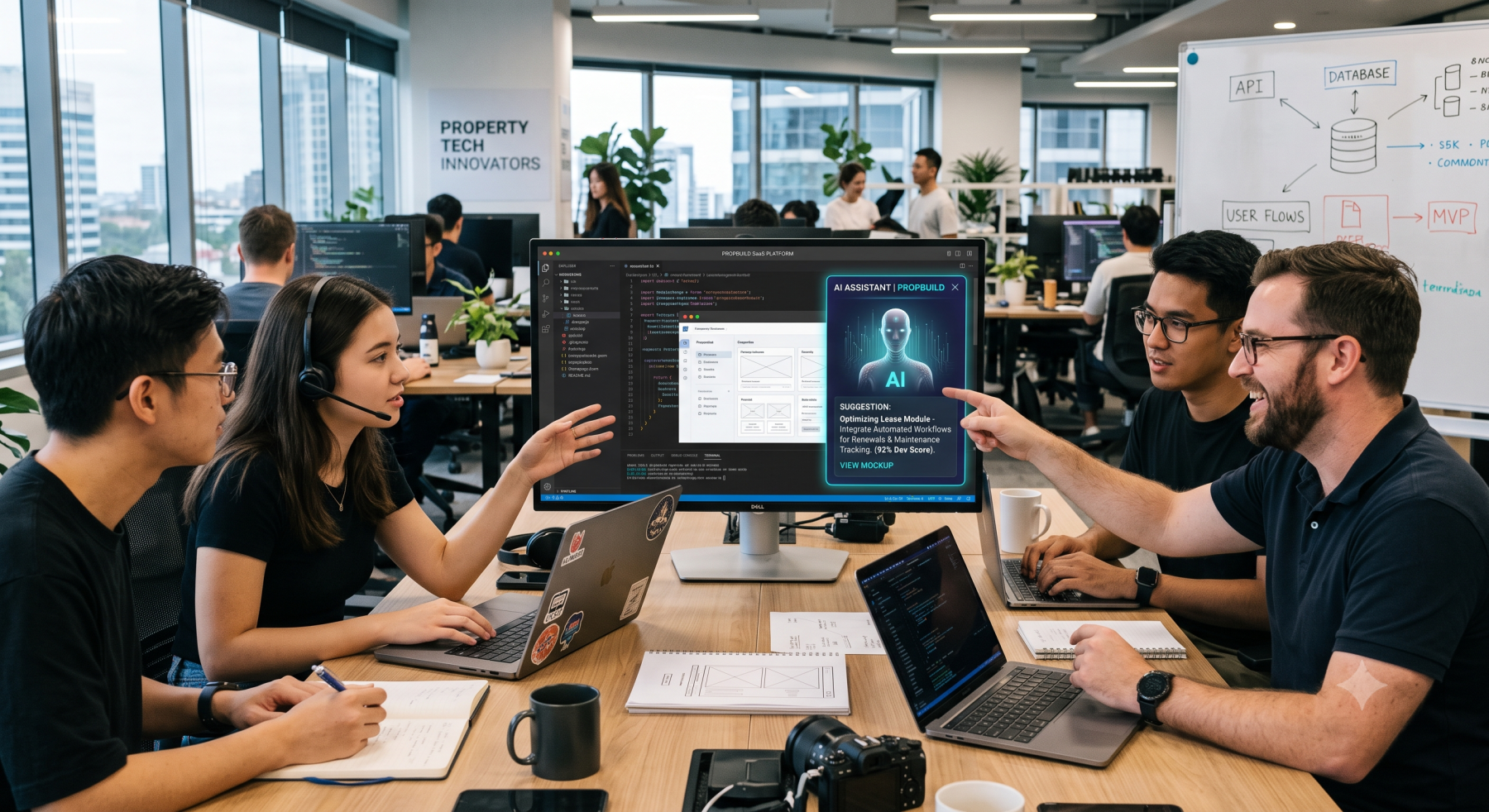
Maintenance is one of the most time-sensitive workflows in property management. A tenant request usually includes the issue type, unit, property, urgency, access details, attachments, vendor assignment, cost, status updates, and repair history. This is why maintenance request automation should convert every request into structured data from the beginning.
In a custom platform, the system should collect the tenant’s message, unit details, photos or videos, preferred access time, and previous maintenance history. AI can then classify the issue, detect urgency, identify duplicate requests, and prepare a clear work order for the manager.
For example, if a tenant writes, “The heating stopped working in the unit,” AI maintenance software can classify the request as an HVAC issue, check whether the building has similar open tickets, review previous repair history for the same unit, and mark the request as high priority if heating failures are defined as urgent in the property rules. The manager can then approve escalation, assign the right technician, or ask the tenant for additional details.
Work order automation and vendor routing
The technical value of property maintenance automation is not only faster ticket creation. The real value is clean operational data. Each request should have a category, priority, property ID, unit ID, assigned vendor, timestamps, attachments, cost data, approval history, and completion notes. This makes maintenance easier to track, report, and improve over time.
Work order automation should also support business rules. A routine appliance issue can go to a standard vendor queue, while no heating, a broken exterior lock, electrical risk, or blocked building access may require instant escalation. AI can help detect which rule applies, but managers should still be able to approve, reassign, or override important actions.
For larger portfolios, vendor management should be part of the maintenance module. The platform can store vendor categories, service areas, response times, rates, insurance documents, availability, and past performance. When a new work order is created, the system can suggest a suitable vendor based on issue type, location, availability, and previous results.
Predictive maintenance and auditability
Predictive maintenance can be added after the core request and work order flow is stable. The system can analyze repair history, recurring issues, seasonal patterns, inspection data, and maintenance costs to detect problems before they become expensive. For example, it can flag repeated HVAC issues in one building, recurring appliance failures in the same unit, or vendors with slow response times.
For AI SaaS app development, the maintenance module should be designed with transparency and auditability. Property managers need to see why a request was marked urgent, why a vendor was suggested, what data was used, and who approved the action. This is especially important when maintenance affects tenant safety, repair costs, owner reporting, or legal responsibility.
A strong maintenance module helps property management companies reduce manual coordination, respond faster to tenants, control repair costs, and keep a clear operational history for every unit and property.
Tenant Communication Software and AI Resident Assistants for Property Managers
Centralized communication across tenant channels
Tenant communication software should do more than store messages. In a property management platform, it should collect tenant requests from the resident portal, mobile app, email, SMS, push notifications, and web chat, then connect each message to the right tenant profile, unit, lease, property, and workflow.
This structure is important for AI property management software because tenant communication often turns into action. A rent question may require payment data. A maintenance update may need a work order status. A lease question may need approved policy information. A complaint may need escalation to a property manager. Without this context, AI can only provide generic answers.
AI resident assistant with approved data sources
An AI resident assistant can handle routine questions about rent due dates, payment methods, maintenance status, move-in instructions, parking rules, amenity access, trash collection, or basic lease policies. However, it should only answer from approved sources: lease records, property rules, knowledge base articles, payment data, maintenance ticket statuses, and system notifications.
For example, if a tenant asks about a maintenance update, the assistant should not generate a vague answer. It should check the related ticket status, assigned vendor, scheduled visit, and latest manager note. If the question is connected to a complaint, dispute, emergency, or exception, the system should route it to a human manager instead of trying to resolve it automatically.
Technical requirements for resident communication software
From a technical perspective, resident communication software should include intent classification, message tagging, conversation history, notification rules, escalation logic, and role-based access. A tenant should only see their own data. A vendor should only see messages connected to assigned work orders. A property manager should see the full context across tenants, units, properties, tasks, and previous interactions.
A property management chatbot should also have clear limits. It should not make legal, financial, or housing decisions, change lease terms, approve requests, or promise repair timelines without system confirmation. If a request requires judgment, exception handling, or sensitive review, the conversation should move to a human manager.
Automated tenant messaging and auditability
Automated tenant messaging can cover recurring operational updates: rent reminders, payment confirmations, maintenance status changes, inspection notices, lease renewal reminders, document requests, move-in checklists, and move-out instructions. These messages should be template-based, personalized with system data, and recorded in the tenant profile.
For AI SaaS app development, the communication layer should be connected to tenant records, lease data, maintenance tickets, payment status, documents, notifications, and permissions. Every automated response, escalation, message edit, notification, and human takeover should be logged. This helps property managers understand what the AI answered, what data it used, and when a team member intervened.
AI SaaS App Development Cost, Multi-Tenant SaaS Architecture, and PMS Integration
Multi-tenant SaaS architecture and data separation
The cost of AI SaaS app development depends not only on the number of features, but also on how the product is built technically. For property management companies, the platform usually needs a multi-tenant SaaS architecture, where multiple companies, properties, owners, tenants, and vendors can use the same system while their data remains separated and protected.
This architecture should support role-based access, tenant-level data isolation, property-level permissions, secure document storage, activity logs, subscription plans, and scalable infrastructure. A small MVP can start with fewer roles and simpler workflows, but the core data model should be designed for growth from the beginning. Rebuilding permissions, billing logic, or data separation later can be much more expensive than planning them early.
PMS integration and external software connections
PMS integration is another major cost factor, especially when a property management company already uses existing software for accounting, payments, CRM, leasing, maintenance, reporting, or document signing. A custom platform does not always need to replace these tools. In many cases, it should connect with them and become the central workflow layer.
Common third-party integration areas include:
-
payment providers for rent collection and deposits;
-
accounting tools for invoices, expenses, and owner reports;
-
CRM or leasing systems for lead management;
-
document signing platforms for leases and agreements;
-
SMS, email, and push notification services;
-
maintenance or vendor management tools;
-
analytics and reporting systems;
-
existing property management platforms.
Each external software connection adds complexity because the development team needs to handle authentication, API limits, data mapping, sync frequency, error handling, permissions, and audit logs. This is why property management system integration should be planned before development starts, not added as an afterthought.
Approximate AI SaaS app development cost
The AI SaaS app development cost can vary widely depending on product complexity, AI depth, integrations, mobile app requirements, and security needs. A simple MVP with limited AI support will cost much less than a full platform with multi-tenant architecture, advanced analytics, payment flows, system integrations, and AI-driven automation across leasing, maintenance, and tenant communication.
|
Product scope |
Approximate development cost |
|
Lean MVP with basic AI assistance |
$11,000-$20,000 |
|
Full MVP with leasing, maintenance, payments, documents, and basic AI workflows |
$20,000-$37,000 |
|
Advanced AI SaaS platform with multi-tenant architecture, third-party integrations, analytics, and mobile apps |
$37,000-$75,000+ |
|
Enterprise-grade platform with custom AI models, deep integrations, advanced reporting, and high security requirements |
$75,000-$125,000+ |
These ranges are approximate. The final cost depends on how many workflows are included in the first release and how deeply AI is connected to each of them. A product with basic property records, simple request handling, document storage, and AI summaries will be much cheaper than a platform with leasing automation, payment flows, mobile apps, predictive maintenance, AI resident assistants, portfolio analytics, advanced reporting, and deep integrations with existing systems.
AI features and ongoing operating costs
AI-related costs should be planned separately from standard software development. Basic AI features, such as message classification, lease summaries, document extraction, and workflow suggestions, are usually less expensive than predictive maintenance, rent forecasting, portfolio analytics, or custom AI models.
If the platform uses third-party AI APIs, the product team should also plan ongoing usage costs for model calls, document processing, chat activity, monitoring, and infrastructure. These costs may range from a few hundred to several thousand dollars per month depending on the number of users, processed documents, message volume, and reporting frequency.
The safest development approach is to launch with a stable operational core, collect real usage data, and expand AI automation step by step. This reduces technical risk and helps property management companies avoid paying for advanced features before the product has enough reliable data to support them.
How JoinToIT can support AI SaaS app development
JoinToIT provides custom property management software and AI SaaS app development services for companies that need more than a ready-made tool. The team can help define MVP scope, design SaaS architecture, build web and mobile interfaces, integrate third-party systems, and add AI features that support real property management workflows.
For property management companies, the goal is not to build the most complex AI product from day one. The goal is to launch a reliable platform with the right architecture, secure data handling, useful automation, and enough flexibility to grow. With the right development approach, an AI SaaS app can start as an MVP and gradually evolve into a full operational platform for leasing, maintenance, tenant communication, reporting, and portfolio management.
See how we build property management software and the custom SaaS development behind multi-portfolio platforms.