

Outsourcing SaaS development means hiring an outside team to design, build or maintain your SaaS product instead of, or alongside, in-house engineers. It suits companies that need to ship faster, fill skill gaps or grow a team without long hiring cycles. The trade-off is less direct control, which the right engagement model and contract offset.
This guide covers when outsourcing makes sense, the three common engagement models, a checklist for choosing a vendor, and the risks to plan for. If you are already considering outsourcing SaaS development to Join.To.IT, that page describes our services and how we work.
Key takeaways
- Outsource when speed, missing skills or hiring time block your roadmap, not only to cut costs.
- Pick the engagement model by how much control you want: the vendor manages a project, a dedicated team follows your priorities, or augmented staff work inside your team.
- Judge vendors on evidence you can check: similar SaaS work, client references, the people who will actually work on your product, and a short paid trial.
- Most outsourcing problems come from vague scope, weak communication and unclear ownership of code. The contract and the first weeks of work can prevent all three.
Why SaaS companies outsource development
SaaS companies outsource development to get skills and capacity faster than hiring allows, while their own people stay focused on the product and customers. Cost matters too, but it is rarely the only reason, and it is the easiest one to get wrong.
1. Lower cost of a full team
Outsourcing can cost less than building the same team in-house because you skip recruiting, onboarding, benefits and idle time between projects. Rates vary widely by region and seniority, so compare the full cost of delivering a feature, not hourly rates. A cheaper vendor that needs twice as long is not cheaper.
2. Skills your team does not have yet
SaaS products need some skills that a small team rarely has on day one: multi-tenant architecture, subscription billing, integrations with third-party APIs, cloud infrastructure and compliance work such as HIPAA or SOC 2. A vendor that has built these before avoids the mistakes a team makes the first time.
3. Flexible team size
You can add engineers for a launch, a migration or a large integration and reduce the team afterward. With in-house hiring, the same change takes months in both directions. Check the notice period in the contract, because that is what defines how flexible the team really is.
4. Faster time to market
An experienced vendor arrives with a working process: a backlog, code review, automated testing, a release routine. You skip the months it takes to hire a team and agree on how it works. That matters most for an MVP, where the goal is to get real users before the budget runs out.
5. Focus on the core business
When a partner handles delivery, founders and in-house staff can spend their time on product decisions, sales and customer feedback. Someone on your side still has to own the product: set priorities, accept work and talk to users. Outsourcing moves the engineering work, not the responsibility for what gets built.
When outsourcing is the wrong choice
Outsourcing works poorly when nobody on your side can make product decisions quickly, or when the core of the business is a technology you must own as in-house knowledge. It also struggles when requirements change daily and you cannot spend time with the vendor every week. In those cases, hire a technical lead first and outsource around them.
SaaS outsourcing engagement models compared
There are three common engagement models for outsourcing SaaS development: project-based outsourcing, a dedicated team and staff augmentation. They differ in who manages the day-to-day work, who carries delivery risk and how you pay.
| Model | What you get | Your control | Cost model | Best for |
|---|---|---|---|---|
| Project-based (full outsourcing) | A vendor team delivers an agreed scope end to end: analysis, design, development, testing and release | Low day to day; you approve the scope, milestones and demos | Fixed price per scope or milestone, or time and materials when the scope is still moving | A well-defined MVP or a separate module; companies without an in-house technical lead |
| Dedicated team | A cross-functional team (developers, QA, project manager, designer as needed) that works only on your product | Medium to high; you set priorities, the vendor handles hiring, people management and process | Monthly fee per team member | Ongoing development of a live product; roadmaps longer than six months |
| Staff augmentation (outstaffing) | Individual engineers who join your team and follow your processes | High; you assign tasks, review code and run releases | Hourly or monthly rate per person | Filling a specific skill gap or adding capacity when you already have an engineering manager |
A dedicated development team sits between the other two: you keep control of the roadmap without managing every engineer. If you plan to hire individual engineers abroad, our guide on how to hire offshore software developers covers interviews and contracts.
How to pick the right model
Work through these five questions in order. The answers usually point to one model.
- Can you describe the scope on one page? If yes, project-based work with a fixed price is realistic. If not, start with a discovery phase or choose time and materials.
- Who will manage the engineers? If you have an engineering manager or CTO with free time, staff augmentation works. If not, choose a dedicated team or a project-based contract.
- How long do you need help? A few weeks or months points to augmentation or a project. A year or more usually points to a dedicated team.
- What is the full cost? Add your own management time to the vendor's price. Fixed price is easier to budget, but vendors include a risk margin and every change goes through a change request.
- Who should carry delivery risk? Project-based contracts put more of it on the vendor. With augmentation, the risk stays with you.
How to choose a SaaS development partner: vendor checklist
Choose a partner on evidence you can check: similar SaaS work, people you can talk to, how the vendor communicates before you sign, and contract terms that protect your code. Use the checklist below during calls and before you sign.
Looking for an outsourcing partner?
Get to know how our services can help you.
Experience and skills
- They show at least two products similar to yours in business model (B2B, multi-tenant, subscription billing) and can explain the architecture choices behind them.
- They have worked with your tech stack, or can explain clearly why they would use a different one.
- They know the rules of your industry, such as HIPAA, PCI DSS or GDPR, if those apply to you.
Reputation and references
- You can talk to two or three past clients, ideally ones who worked with the vendor for more than a year.
- Reviews on independent platforms such as Clutch match what the vendor tells you.
- They can describe a project that went wrong and what they changed afterward.
Communication and process
- You meet the people who would work on your product, not only the sales team.
- They propose a regular rhythm: sprint demos, written status reports and a backlog you can see at any time.
- Your working hours overlap by at least a few hours a day.
- Answers during the sales process are fast and specific, not generic.
Pricing and contract terms
- The estimate splits work into phases and lists its assumptions in writing.
- The contract assigns the code and other IP to you, and you have access to the repository from the first day.
- There are clear terms for changing team size, replacing a team member and ending the contract, including a handover.
- The NDA and data protection terms cover access to production data.
Team and cultural fit
- They agree to a short paid trial or a discovery phase before a long contract.
- The seniority of the team is stated in writing, along with what happens if a key person leaves.
- They push back when a requirement will not work, instead of agreeing to everything.
Risks of outsourcing SaaS development and how to manage them
The main risks of outsourcing SaaS development are unclear scope, communication gaps, poor code quality, security problems, vendor lock-in and hidden costs. You can reduce most of them before work starts, through the contract and the way you set up the first sprints.
| Risk | What it looks like | How to reduce it |
|---|---|---|
| Unclear scope | Estimates keep growing; delivered features do not match what you expected | A discovery phase, written acceptance criteria for each feature, a demo every sprint |
| Communication gaps | Surprises at demos; questions wait days for an answer | A fixed meeting schedule, one accountable person on each side, a shared backlog and chat |
| Code quality and technical debt | Bugs after each release; new features take longer every month | Code review and automated tests agreed in the contract, an independent code review at key milestones |
| Security and data protection | Shared passwords, broad access to production data, secrets in the code | Least-privilege access, no production data in development, NDA and data processing terms, security checks in the build pipeline |
| Vendor lock-in | Only the vendor understands the system; switching looks too expensive | Repositories and cloud accounts in your company's name, documentation as a deliverable, a handover clause |
| Hidden costs | Change requests, idle time, hours your own team spends managing the vendor | Fixed-price phases or time and materials with a monthly cap; track your own team's time on the project |
| Key people leaving | Progress slows; the new person needs weeks to catch up | Replacement terms in the contract; knowledge of each part of the system shared by at least two people |
Review this list with the vendor before you sign. A good partner will already have answers for each row and will tell you which risks they see in your project.
How Join.To.IT can help
Join.To.IT designs and builds B2B SaaS products, from a SaaS MVP to a multi-tenant platform, and takes over SaaS products that already have paying users. Our development team is based in Kyiv, Ukraine, and since 2012 we have delivered more than 500 projects. We work in all three models described above: full project outsourcing, a dedicated team and outstaffing. You get documented scope, regular demos and reporting, and code you own from day one.
Two SaaS products we have built:
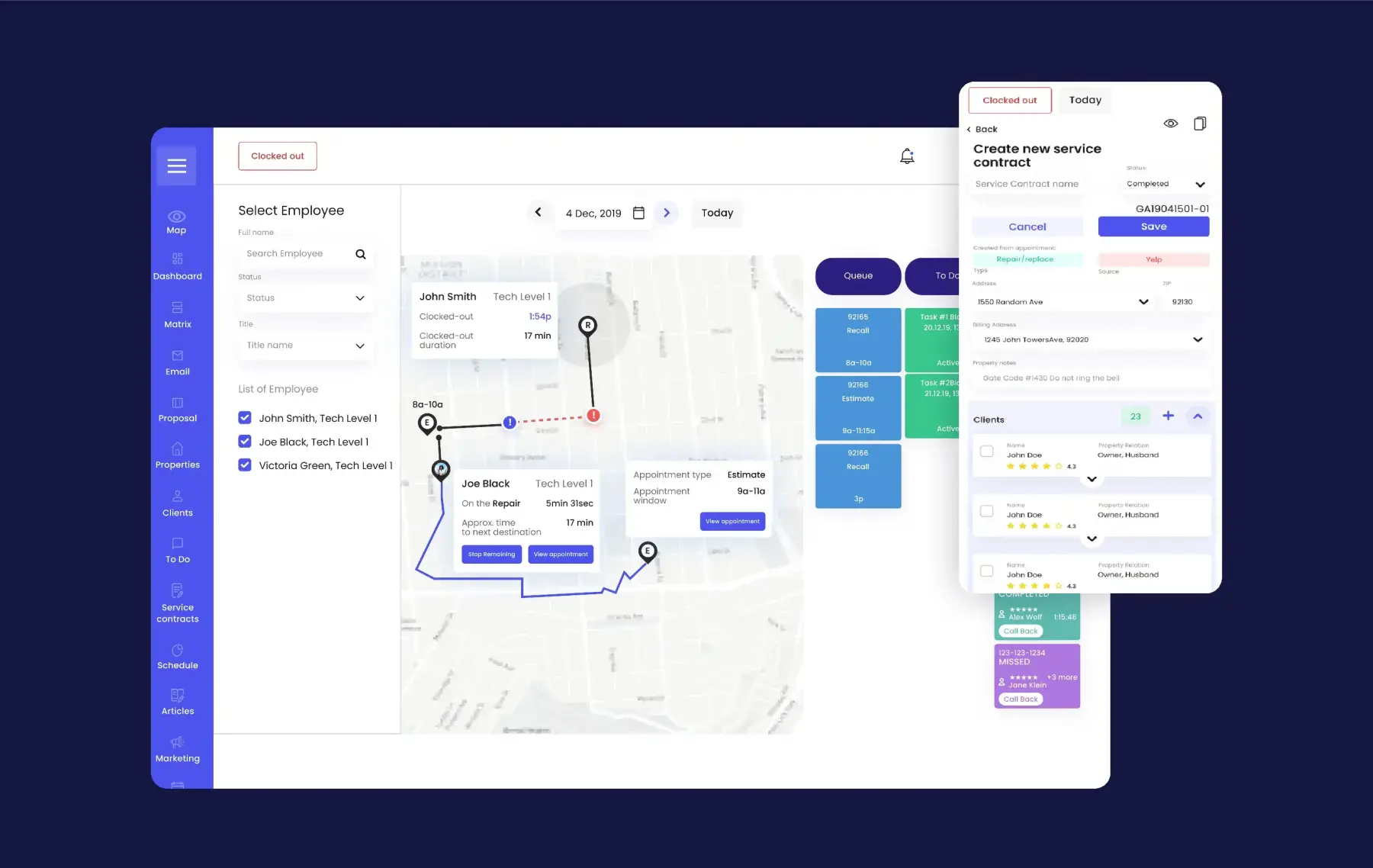
- Orcatec, a business management platform. Orcatec helps field-service companies talk to clients, plan the team's work, keep accounts and take payments inside the platform, with integrations to several payment systems. It runs as a web app and as mobile apps, has around 300 daily users and bills per user. Read the Orcatec case study.
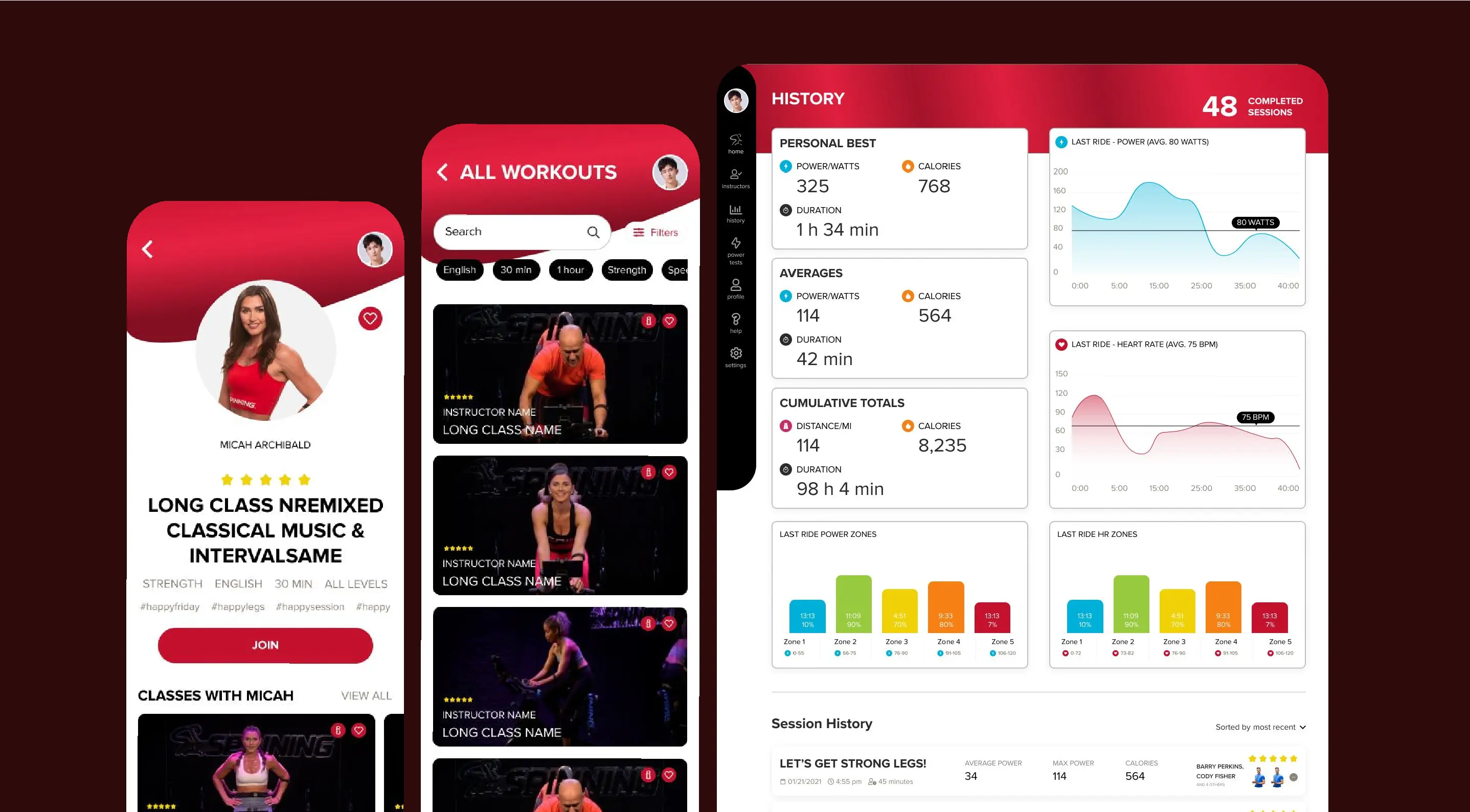
- Spinning, a cross-platform fitness app. We built the Spinning indoor cycling app for a company that trains fitness instructors and makes commercial and home bikes. The app connects the bike and tracking devices to give a full picture of each workout, keeps training history available on any device and offers specialized training classes. Read the Spinning case study.
If you are deciding how to outsource your SaaS product, book a free consultation and we will help you choose the model that fits your scope and team.
FAQ
Is it cheaper to outsource SaaS development than to hire in-house?
Often, but not always. Outsourcing removes recruiting, onboarding, benefits and idle time, and it lets you pay only for the team size you need. It can cost more when the vendor is slow, when scope keeps changing under a fixed price, or when your own team spends many hours managing the vendor. Compare the total cost of delivering the same features, not hourly rates.
Which engagement model is best for a SaaS startup?
It depends on who will manage the work. A startup without a technical co-founder usually does better with project-based outsourcing or a dedicated team, where the vendor runs the process. A startup with a CTO who has time to manage engineers can use staff augmentation to add specific skills. Many companies start with a project for the MVP and move to a dedicated team after launch.
How do I protect my code and intellectual property when outsourcing?
Put it in the contract and in your accounts. The contract should assign all code and other IP to your company and include an NDA. Keep the code repositories, cloud accounts and domains registered to your company from the first day, and give the vendor access rather than the other way around. Ask for documentation as a deliverable so that another team could take over.
How much does it cost to outsource SaaS development?
The cost depends on the scope, team size, seniority, the vendor's region and how long you need the team. A small MVP and a multi-tenant platform with integrations differ by an order of magnitude. Ask several vendors for estimates split into phases with written assumptions. Our SaaS development cost guide breaks down what drives the price.
Can I bring development in-house after outsourcing?
Yes, if you plan for it from the start. Keep the repositories and infrastructure in your name, require documentation and automated tests, and add a handover clause to the contract. When you hire in-house engineers, have them work alongside the vendor's team for a few weeks before the vendor steps back. A gradual handover is safer than switching everything on one date.
If you outsource the whole product, see how we work as a SaaS development company: a dedicated product engineering team usually works better than separate contractors. For testing only, see our offshore QA services.