
The Rise of Bluetooth in Transportation IoT: Why the Industry Is Switching to Low-Energy Connectivity
Bluetooth technology, and in particular its BLE low-energy standard, has moved far beyond simple uses in consumer gadgets, such as headphones and wearables. Today, Bluetooth in Transportation IoT has become a foundational layer for large-scale logistics, fleet management, telematics, and mobility ecosystems. Companies developing digital transport platforms with the help of SaaS development services increasingly replace Wi-Fi, Zigbee, and expensive cellular IoT modules with Bluetooth. It is because Bluetooth offers the best balance of energy efficiency, reliability, and cost.
Why transportation companies are moving towards Bluetooth
The requirement for high data throughput in most Transportation IoT systems is not really necessary. Continuous uptime, long battery life, stable connectivity during movement, and inexpensive hardware that scales to thousands of assets are needed. Bluetooth is the only mainstream technology that can cover all these needs at once, making it a go-to choice for SaaS development companies building next-generation logistics platforms.
1. Bluetooth provides class-leading power efficiency
Transportation assets such as containers, trailers, forklifts, and warehouse equipment utilise compact BLE sensors capable of operating:
-
1-3 years on a single coin-cell battery;
-
without cables or wired power;
-
without SIM cards or modems;
-
with zero maintenance.
For companies building IoT-enabled tools with a SaaS product development agency, this drastically reduces OPEX while deploying thousands of nodes across fleets and warehouses.
2. Bluetooth hardware is dramatically cheaper than cellular or Wi-Fi modules
A fleet with 5,000 to 20,000 assets requires a technology solution which scales financially, not just technically. BLE sensors:
-
3-6x less expensive than LTE-M or NB-IoT modules;
-
10-20x less expensive than wired GPS telematics;
-
easy to attach, replace and onboard.
The Bluetooth-powered systems are ideal for:
-
trailer/pallet/container tracking;
-
Temperature and humidity monitoring;
-
BLE smart locks;
-
cargo condition monitoring;
-
equipment telematics.
That is why full-cycle software development companies increasingly treat Bluetooth as the default protocol when designing IoT-enabled SaaS applications.
3. Bluetooth is stable during movement, which is an essential factor in transport environments
Where Wi-Fi becomes unstable, and Zigbee requires mesh infrastructure, Bluetooth is more reliable:
-
high-movement conditions;
-
acceleration and vibration;
-
noisy industrial settings;
-
rapidly changing network zones.
Such stability is crucial in Transportation IoT systems, where assets continuously move around between warehouses, depots, trucks, and hubs.
4. Bluetooth integrates naturally with driver mobile apps
A contemporary logistics ecosystem depends critically on a driver's smartphone as a primary gateway. Bluetooth is the universal communication layer between:
-
BLE sensors;
-
smart locks;
-
temperature probes;
-
on-board cargo modules;
-
warehouse scanners;
-
driver mobile apps.
That is why Bluetooth is the standard choice for teams building SaaS MVP development and custom full-cycle software development services.
5. Bluetooth gives clean, structured data, which is optimal for AI analytics
BLE sensors generate continuous, high-resolution telemetry streams that are perfect for AI-driven analytics in transportation SaaS applications.
AI models developed by SaaS platform developers use Bluetooth data for:
-
predict maintenance failures;
-
detect cold-chain risks;
-
identify abnormal route patterns;
-
forecast ETAs;
-
optimise asset utilisation;
-
analyse loading/unloading cycles.
This makes Bluetooth in transportation IoT a strategic foundation for any company building AI-powered logistics platforms.
Architecture of Bluetooth in Transportation IoT Systems

Architecture is one of the main reasons why Bluetooth in Transport IoT is fast becoming the standard connectivity layer for logistics, fleet management, and smart mobility ecosystems. Unlike cellular IoT, wired telematics, or proprietary RF systems, Bluetooth leverages a lightweight, modular design that offers high scalability with significantly lower costs and simultaneously improves reliability. This makes it exceptionally fit for transport platforms built by a SaaS development agency, or any full-cycle software development company focused on scalable cloud products.
A typical IoT system powered by Bluetooth would contain four interconnected layers: sensors at the edge, mobile gateways, the cloud ingestion pipeline, and lastly, the SaaS application layer used by fleet managers and logistics teams. The combination of these layers allows quick, low-power, cost-effective data flow from thousands of moving assets to a central platform.
Edge Layer: Bluetooth Sensors & Beacons
The core of every Bluetooth in Transportation IoT network consists of BLE sensors. These are small, battery-powered devices mounted on trailers, pallets, containers, forklifts, or warehouse equipment. Because they rely on Bluetooth Low Energy, they can operate for years on a single coin-cell battery and at a far lower cost than an LTE, NB-IoT, or proprietary telematic modules. Simple as they may be, they provide the fundamental telemetry required for logistics and fleet operations: temperature, humidity, shock, motion, proximity, open/close events, and presence detection.
Mobile Gateway Layer
One of the most salient architectural advantages of Bluetooth is that it removes the need to install expensive gateways in every vehicle. Instead, the system makes use of devices which companies already have-drivers' smartphones, warehouse tablets, or handheld scanners as mobile gateways. These constantly collect BLE packets and upload them to the cloud via mobile internet. That means no hardware installation costs, SIM card provisioning, wiring, and maintenance, which makes Bluetooth ideal for organisations working with SaaS development companies that like to simplify infrastructure rather than expand it.
The gateway applications must handle background scanning, offline-first behaviour, secure data transfer, battery optimisation, and unreliable network conditions as part of the general SaaS application development services. Yet, the overall cost turns out to be much lower than running thousands of cellular-enabled trackers.
Cloud Ingestion & Processing
Once the Bluetooth data reaches the cloud, it passes through an ingestion pipeline that validates, enriches and routes the telemetry into analytics modules. A typical cloud layer designed by SaaS product development services includes geofencing logic, cold-chain compliance checks, timestamp correction, anomaly detection, AI-based event classification and routing rules for alerts or notifications. Due to the extremely small size of BLE packets, the cloud costs remain low even while handling millions of messages per day, a key advantage for any SaaS platform looking to scale horizontally.
SaaS Application Layer
The final layer is the SaaS platform where all the processed BLE data becomes actionable. Fleet managers can see maps, dashboards, asset status, temperature records, utilisation analytics, SLA alerts, and predictive insights generated by AI. This is the layer that full-cycle custom software development services usually build, making sure logistics teams, dispatchers, and warehouse operators can access a clean interface with real-time visibility.
Why is this architecture superior to other IoT network designs?
What truly sets Bluetooth in Transportation IoT apart is how easily the entire system scales. Adding a new trailer, pallet, or scooter doesn't require wiring, modem installation or onboarding SIM cards. A company simply attaches a BLE sensor, adds it to the SaaS platform, and the system begins collecting data immediately. The infrastructure remains the same whether a fleet is tracking 500 or 50,000 assets.
Due to the heavy reliance on software-driven gateways and lightweight cloud ingestion, Bluetooth remains far more flexible than GPS-based telematics or LoRaWAN, while being dramatically cheaper than cellular IoT. This, in turn, is the reason why SaaS development agencies increasingly recommend Bluetooth as the core connectivity layer for next-generation logistics platforms.
Cost Factors: Why Bluetooth in Transportation IoT Is the Most Affordable Technology for Fleet Systems
When companies evaluate options for monitoring fleets, from NB-IoT and LTE-M to LoRaWAN, Wi-Fi or traditional GPS telematics, the same result comes again and again: Bluetooth in Transportation IoT offers the lowest total cost of ownership. Its hardware is cheaper, the infrastructure is simpler, the cloud expenses are smaller, and scaling is nearly free of costs. For organisations building logistics or fleet platforms with SaaS development services, Bluetooth provides that financial advantage which competing IoT technologies cannot match.
Why Bluetooth Hardware Is Significantly Cheaper
Bluetooth's affordability starts at the hardware level. BLE sensors are, by design, light, inexpensive, and easy to deploy. Unlike cellular IoT modules, they don't have modems, SIM cards, antennas, power circuits, or certifications linked to telecommunications networks. Most BLE transport sensors cost in the range of $3-$12; NB-IoT trackers start at $25-50, and wired GPS telematics easily exceed $200-300 per unit, including installation.
Consider the savings for a transport organisation that has to manage thousands of assets: pallets, trailers, containers, tools, or warehouse equipment. Savings add up fast in a fleet tracking 5,000 assets, potentially saving tens or hundreds of thousands of dollars before software development has even started.
Why Bluetooth Eliminates Gateway Costs Almost Entirely
One of the major cost advantages of Bluetooth for Transportation IoT is that the system does not require dedicated gateways. Every modern smartphone, every handheld scanner, every in-cab tablet, and every warehouse device already includes Bluetooth. This means that the devices your staff already carry provide data gateways, reducing infrastructure expenses to near zero.
Instead of installing dozens or hundreds of industrial gateways across facilities or vehicles, companies rely on:
-
drivers' smartphones;
-
warehouse tablets;
-
supervisor devices;
-
bluetooth-enabled handheld terminals.
This drastically reduces hardware investment, maintenance and operational overhead. For SaaS development companies, this also simplifies architecture, as the gateway logic becomes part of the mobile app rather than an external device fleet that needs configuration and support.
Lower cloud costs due to ultra-light Bluetooth packets
One of the most overlooked expenses in IoT projects is cloud usage. Cellular and long-range LPWAN devices send large payloads, often hundreds of bytes per event. In contrast, Bluetooth devices transmit extremely small packets, sometimes as little as 16-64 bytes.
This cuts down on cloud ingestion, message routing, analytics costs, and storage overhead by 20-40x compared to cellular IoT for SaaS platforms that need to process millions of events per month. For a year, this can save a mid-size transport SaaS system anywhere from $2,000 to $10,000, with large enterprises saving far more.
These lightweight payloads also simplify system design. Full-cycle software development companies can create a smaller, more efficient backend with fewer autoscaling triggers and more predictable cloud usage.
Scaling Bluetooth Networks Is Nearly Free
Once a Bluetooth architecture is in place, expansion is extremely low-cost. Adding new sensors requires attaching the beacon, assigning metadata within the SaaS platform and letting existing mobile gateways automatically detect it.
There are no SIM-card activations, no wiring downtime, no technician visits, and no vehicle immobilisation required. This is one of the major reasons why Bluetooth in Transportation IoT remains the go-to solution for large fleets that must scale from hundreds into tens of thousands of assets with minimal friction.
Real Cost Example: How Much Bluetooth IoT SaaS Development Actually Costs
Below is a realistic example of a BLE-based Transport IoT MVP, built by a SaaS development company for a fleet of 3,000-10,000 assets.
A production-grade MVP generally consists of:
-
BLE gateway mobile apps for iOS & Android;
-
background scanning and energy optimisation;
-
cloud ingestion - AWS, GCP;
-
real-time fleet dashboard;
-
alerts and rules engine;
-
onboarding and device-management module;
-
Integrations with TMS/WMS/ERP;
-
optional AI anomaly detection.
Estimated development cost:
-
$85,000 - $140,000
-
Timeline: 12-18 weeks
Comparatively, the Cellular IoT MVP may cost as much as 2-3x more, with LTE trackers, requiring twice the development time because of complex networking logic, device and SIM lifecycle management, and heavy cloud infrastructure.
In Transportation IoT, the annual savings when migrating from cellular or wired telematics to Bluetooth are usually in the range of $120,000-$350,000 per year.
Savings come from :
-
zero SIM fees;
-
cheap sensors;
-
minimal maintenance;
-
lower cloud ingestion;
-
gateway-free architecture;
-
lower software scaling costs.
These numbers explain why logistics operators, mobility startups, and enterprise fleets increasingly shift towards Bluetooth-native systems, and why SaaS development agencies build transportation platforms around BLE rather than traditional IoT technologies.
Security Model of Bluetooth in Transportation IoT Systems
Security tends to be one of the most misunderstood topics when organisations evaluate Bluetooth in Transportation IoT. Most take the presence of BLE in earbuds and wearables to mean BLE is inherently "consumer-level." The fact is that modern Bluetooth-especially BLE 5.x provides a highly secure connectivity foundation for enterprise fleets, logistics networks, cold-chain monitoring, and large-scale warehouse systems, provided the architecture is implemented correctly. If paired with a well-designed SaaS backend, Bluetooth can provide end-to-end security that rivals or exceeds more expensive IoT technologies.
Why Bluetooth Security is strong enough for large transport fleets
1. LE Secure Connections (ECDH)
For instance, Bluetooth 5.x uses the Elliptic Curve Diffie-Hellman cryptographic standard used even in banking systems.
It prevents:
-
Interception during pairing;
-
Spoofing of sensors or beacons;
-
Unauthorized device onboarding.
This becomes critical when there are thousands of sensors communicating with driver apps or warehouse tablets.
2. AES-128 Link-Layer Encryption
Every BLE packet is encrypted with AES-CCM so that even intercepted radio traffic remains unreadable.
This guards against:
-
cloning sensors;
-
injecting false telemetry;
-
cargo or asset data changes.
It guarantees the integrity of data across the chain for logistics SaaS platforms.
3. Rolling Keys & Nonces
Bluetooth rotates session keys and uses different nonces for each transmission.
This prevents:
-
replay attacks;
-
duplicated state events;
-
injection of spoofed location or sensor data.
Essential for cold-chain, pallet tracking, and dock-to-dock workflows.
4. SaaS-Level Encryption & Access Control
Bluetooth secures the radio layer; SaaS development service secures everything above it.
Modern platforms add:
-
TLS 1.3 for gateway-to-cloud traffic;
-
Signed payloads;
-
Role-based access control;
-
Encryption of sensitive data.
This creates a secure pipeline: beacon - gateway - cloud - dashboard.
5. Randomised MAC Addresses
BLE devices often randomise their identifiers to prevent the passive tracking of:
-
warehouse movements;
-
vehicle routes;
-
cross-dock transfers;
-
assets distribution.
This secures operational privacy across multi-hub logistics networks.
Why Bluetooth security works especially well in SaaS architectures
Bluetooth architectures are lightweight; hence, SaaS platforms can run heavyweight security logic without system slowdowns.
Common enterprise implementations include the following:
-
device identity services;
-
zero-trust gateways;
-
ingestion via AWS IoT/GCP Pub/Sub/Kafka;
-
tampering anomaly detection auditing;
-
access governance.
This makes Bluetooth easy to secure at scale versus cellular IoT or UWB.
How Bluetooth Security Compares to Other IoT Technologies
|
Technology |
Security Level |
Attack Surface |
Cost |
Suitability for Fleets |
|
Bluetooth in Transportation IoT |
High (AES + ECDH + SaaS encryption) |
Low |
Lowest |
Best for asset-level, zone-level and hybrid indoor/outdoor tracking |
|
LoRaWAN |
Medium (AES only) |
Medium (gateway spoofing possible) |
Low–Medium |
Good for long-range outdoor use only |
|
NB-IoT / LTE-M |
High |
Higher (SIM lifecycle vulnerabilities) |
Expensive |
Great for GPS, inefficient for dense asset networks |
|
Wi-Fi |
Low–Medium |
Very high |
Medium |
Poor for moving fleets and large warehouse hubs |
Bluetooth delivers the strongest overall balance: high security + lowest cost + minimal infrastructure overhead.
Bluetooth for Fleet Tracking, Logistics and Smart Mobility
Bluetooth in Transportation IoT is rapidly becoming the core technology behind modern fleet tracking, logistics visibility and smart mobility ecosystems. While traditional telematics solutions depend on costly GPS hardware, SIM-powered trackers and complex RF infrastructure, Bluetooth enables a lightweight, modular and dramatically more affordable way to monitor thousands of moving assets. When combined with a cloud backend built by a SaaS development company, Bluetooth becomes the connective tissue that links vehicles, trailers, pallets, tools, warehouse zones and mobility vehicles into one real-time ecosystem.
Bluetooth Fleet Tracking: Real-Time Visibility Without Costly Hardware
Traditional fleet tracking leverages GPS units, wiring, SIM cards, and recurring connectivity fees. Bluetooth approaches things very differently.
Small Bluetooth beacons attached to the trailers, containers, or tools/equipment broadcast encrypted signals that can be picked up by the driver's smartphone or in-cab tablet. This mobile device forwards the telemetry to the cloud, acting as a gateway.
The result is a high-accuracy fleet monitoring system, without installing five-figure hardware across an entire fleet.
With Bluetooth in fleet tracking, operators can:
-
verify trailer-truck pairing in real time;
-
detect unauthorised detachments or lost assets;
-
track equipment without RFID scanners;
-
monitor cargo during stops, loading, and unloading.
Bluetooth provides a telematics-grade tracking layer for logistics platform-building companies at a fraction of the traditional deployment cost using full-cycle SaaS development services.
Bluetooth for Logistics: Indoor Visibility GPS Can't Deliver
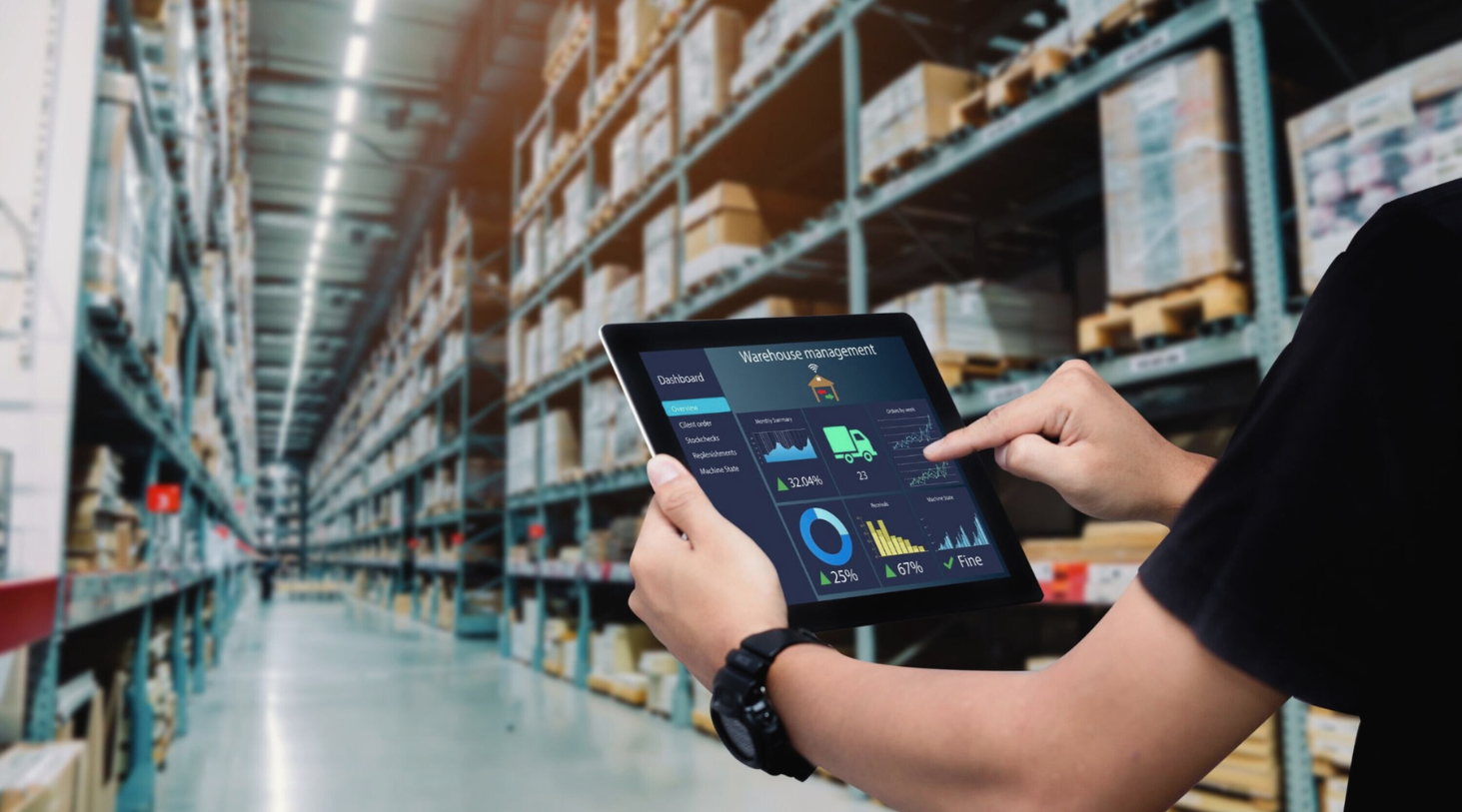
One of the biggest limitations with regard to transportation is that GPS does not work indoors, yet most logistics operations happen inside such places as warehouses, docks, cross-docking terminals, and distribution centres.
Here, Bluetooth in Transportation IoT shines. BLE signals travel well inside buildings, hence accurate localisation of pallets, cold-chain goods, forklifts, warehouse robots, and reusable containers is possible.
Bluetooth enables, with the support of a SaaS platform using SaaS application development services:
-
automatic zone detection: storage, dock, staging;
-
real-time asset movement mapping;
-
temperature monitoring and cold-chain compliance;
-
precise tracking of loading/unloading workflows.
This also enables automated real-time updates of inventory.
Bluetooth builds an indoor live map of the warehouse that updates continuously, sans cameras, UWB anchors, or RFID gates.
Bluetooth for Smart Mobility: Scalable, Contactless & User-Friendly
Indeed, smart mobility platforms, from e-scooters and shared bikes to last-mile delivery vehicles and car-sharing fleets, are embracing Bluetooth as their default connectivity standard. Unlike expensive wireless infrastructure, Bluetooth provides secure authentication and instant interaction directly through a user's smartphone.
It provides frictionless mobile experiences:
-
unlock rental cars using Bluetooth;
-
validating public transport tickets by phone;
-
enabling contactless check-ins at stops;
-
supporting smart parking.
It provides seamless, efficient connectivity of mobility vehicles to the cloud platforms using zero SIMs.
Bluetooth eliminates the most significant infrastructure obstacle in mobility deployments since every user already carries a smartphone. Scaling systems for cities can be built with the help of a custom SaaS product development agency without installing pricey hardware.
Why Bluetooth Is the Smartest Choice for Modern Transport Ecosystems
Across all use-cases, fleet tracking, logistics, and mobility, Bluetooth in Transportation IoT offers a unique combination of:
-
ultra-low hardware cost;
-
long battery life;
-
indoor + outdoor functionality;
-
seamless integration with smartphones;
-
easy cloud connectivity through SaaS platforms;
-
data richness for AI-powered analytics.
One Bluetooth beacon that costs a few dollars replaces hundreds of dollars in equipment. Batteries last for years. Sensors deploy instantly with no wiring. And the data they generate fuels AI-driven insight into utilisation, safety, routing and operational efficiency.
For businesses partnering with SaaS development services, Bluetooth becomes a foundation for:
-
automated fleet tracking;
-
logistics optimisation;
-
real-time warehouse;
-
intelligence mobility;
-
platform orchestration;
-
predictive maintenance.
The Pay-As-You-Grow model enables customers to scale up IoT deployments rapidly and affordably, without cost explosions. Bluetooth in Transportation IoT is not just cheaper, it is strategically superior, more scalable, and perfectly aligned with the needs of modern SaaS-based transport ecosystems.
AI-Driven Insights Powered by Bluetooth IoT Data Streams
Bluetooth in Transportation IoT does more than enable low-cost connectivity; it provides a steady stream of real-time signals that become incredibly powerful when analysed by AI. Every Bluetooth beacon on a trailer, pallet, forklift, or scooter generates micro-events about movement, condition, and behaviour. When integrated into a cloud platform developed by a SaaS development company, this becomes predictive intelligence that lets transport operators automate decisions and improve performance.
AI for Predictive Maintenance
Bluetooth sensors capture small patterns involving vibration, change in motion, temperature fluctuations, or abnormal inactivity. AI models interpret these signals to make predictions about component wear, cold-chain failures, if a lock fails, and equipment servicing needs.
A low-cost Bluetooth tag can prevent breakdowns worth thousands, especially in logistics networks with heavy asset turnover.
Operational Intelligence & Workflow Optimisation
BLE information shows the movement of assets through warehouses, depots, and hubs. AI is used to detect:
-
routing inefficiencies;
-
congestion zones;
-
idle equipment;
-
slow loading/unloading paths.
This allows transport operators to redesign layouts, optimise staffing, and reduce bottlenecks based on real behaviour patterns, rather than assumptions.
AI-assisted fleet planning
Real-time Bluetooth updates enable AI engines to dynamically:
-
allocate vehicles and assets;
-
detect idle trailers;
-
recommend faster loading sequences;
-
suggest best routes based on historical data.
This reduces manual coordination and improves fleet utilisation.
Anomaly Detection & Security
AI identifies suspicious behaviours instantly, such as:
-
assets moving outside of approved zones;
-
after-hours pallet relocation;
-
cold-chain violations;
-
geofence breaches in mobility fleets.
It enhances safety, reduces theft, and supports compliance.
Why Bluetooth + AI + SaaS development service is a Strategic Advantage
Bluetooth provides granular data, AI interprets the data, and the SaaS layer automates the actions. Together, they enable predictive maintenance, smart routing, automate workflows and cost-efficient operations at scale.
Bluetooth in Transportation IoT goes beyond connectivity to empower the intelligence core of modern logistics and mobility ecosystems.
Scalability: How Bluetooth Supports Millions of Devices in Large Transport Networks
The single most significant advantage of Bluetooth in Transportation IoT is how seamlessly it scales from hundreds of sensors to tens of thousands of moving assets without seeing that characteristic infrastructure overload that is inherent in cellular, UWB, or RFID systems.
Modern transport fleets, smart mobility operators, and logistics hubs need technology that can grow with their network. For that, Bluetooth has been specifically designed: dense device environments, low-power signalling, and cloud-native compatibility make it the most scalable option on the market.
Bluetooth Works Reliably in High-Density IoT Environments
Unlike previous generations of wireless standards, Bluetooth uses fast advertising packets, frequency hopping, and ultra-low radio noise. That allows thousands of beacons to coexist in the same zone, such as distribution centres, cross-docking hubs, charging stations, and airports without signal collision.
Key architecture advantages:
-
Short-burst communications reduce congestion.
-
Adaptive Frequency Hopping minimises packet loss.
-
Low-power transmission supports long-term deployment.
-
Devices can seamlessly enter and exit the coverage zones.
This makes Bluetooth ideal for large logistics networks where assets are in almost constant movement.
Gateway Architecture That Scales Without Cost Spikes
Bluetooth networks are extended by adding lightweight gateways rather than by installing expensive telecom infrastructure.
Gateways may run on:
-
industrial Raspberry Pi devices;
-
Wi-Fi/Bluetooth hybrid hubs;
-
warehouse tablets or driver smartphones;
-
ESP32-based microcontrollers.
One gateway handles thousands of packets per minute, forwarding data to the cloud. Scalability simply means adding extra gateways in those places where coverage is needed rather than redesigning the whole network from scratch.
Cloud-native SaaS platforms automatically scale
If Bluetooth IoT is combined with a backend developed by a SaaS development services company, scalability becomes virtually unlimited.
Cloud-native architectures support:
-
Pub/sub streaming for millions of events per second;
-
autoscale serverless ingestion pipelines;
-
horizontally scalable databases;
-
real-time management of the state of an asset.
This allows operators to onboard thousands of new Bluetooth devices without impacting performance or latency.
Real Example: Rapid Scaling Across Multiple Hubs
A logistics company installed 20,000 Bluetooth tags across five hubs. When operations expanded:
-
They added 45,000 more sensors with no infrastructure changes at all.
-
Only installed 12 more gateways for the new warehouse zones
-
The SaaS platform auto-scaled to handle 4× of traffic.
-
Maintenance time decreased by 30%, since Bluetooth devices didn't require virtually any servicing at all.
Scaling to over 100,000 devices was as simple as attaching new tags.
Why Bluetooth Scalability Outperforms Other IoT Technologies
|
Technology |
Main Scaling Limitation |
Bluetooth Advantage |
|
UWB |
Very high hardware cost |
Low-cost gateways + simple deployment |
|
GPS |
Doesn’t work indoors; expensive |
Works indoors & outdoors with hybrid logic |
|
Cellular IoT |
SIM fees + battery drain |
Zero subscription cost, multi-year battery life |
|
RFID |
Not real-time; requires manual scans |
Continuous, automated asset visibility |
Bluetooth in Transportation IoT offers this rare combination: low energy consumption, low hardware cost, high-density support, and cloud-level scalability. Whether expanding the fleet, opening new logistics hubs, or launching mobility services across a city, Bluetooth scales with the operation: fast, reliable, and cost-efficient. Bluetooth is not just a communication protocol; it is a scalability engine for modern Transportation IoT ecosystems.